Health and Fitness

The Most Popular Sedative Drug Used In The Dentistry

The medical technology has developed to a grander range in the past few decades and with this medical advancement, there has been immense development in the medical procedures, surgical techniques and electronic devices for curing the diseases. Certain drugs like sedatives have been applied for dental procedures to reduce the…

Health and Fitness

Extreme Yoga Poses for 2: Advanced Partner Challenge

Yoga, an ancient practice known for its myriad benefits to the body and mind, has evolved significantly over time. Among the most exciting developments in the world of yoga is the rise of extreme partner poses, which combine strength, flexibility, balance, and trust between two practitioners. These advanced poses, often…

Health and Fitness

Makarasana (Crocodile Pose): An In-Depth Guide

Makarasana, also known as the Crocodile Pose, is a restorative yoga posture that has profound physical, mental, and emotional benefits. This pose, known for its resemblance to a resting crocodile, is a powerful tool in yoga practice for promoting relaxation and relieving stress. In this comprehensive guide, we will explore…

Health and Fitness

Gratitude in Yoga: Quotes & Their Powerful Significance

Gratitude is a transformative practice that can significantly enhance our well-being, and it plays a crucial role in yoga. The practice of yoga is not just about physical postures; it also encompasses mental, emotional, and spiritual growth. Incorporating gratitude into your yoga practice can deepen your connection to yourself and…

Digital Marketing

Important SEO Tips in 2019 You Should Know

In the event that you are a tenderfoot, and you have been searching for On-page SEO tips and different insights about SEO, at that point the main thing that you should think about Search Engine Optimization is that there isn’t any enchantment stunt in it.  In any case, by following…

Health and Fitness

300 Hour Yoga Teacher Training in Goa

Mahamukti Yoga provides 300 Hour Yoga Teacher Training in Goa, is a unique opportunity for yoga aspirants serious about deepening their practice and knowledge of yoga. What you will learn At Mahamukti Yoga, you will learn to master the asanas as well as your teaching skills with a 300 hour…

Health and Fitness

10 Best Yoga Teacher Training in UK

Most of us are aware of the fact that yoga originated in India. However, today this ancient science is being practised all across the world. The UK is one such destination where yoga in traditional and contemporary styles is practised at different locations like Bristol, Leeds, Scotland besides the suburbs…

Embracing Bali’s Haven: A Guide to Yoga Teacher Training in Bali

Bali, famous for its exquisite geography, deep cultural heritage, and peaceful environment, is today one of the most popular destinations for yoga lovers. The spirituality of the island and the lush surroundings provide perfect conditions for practicing yoga and become a perfect setting for it.

If one is looking to enhance their knowledge of yoga even more and spread the word about it with the people possibly being interested in balancing practice, yoga teacher training in Bali would be the best option.

Why Choose Bali for Yoga Teacher Training?

  • Immersion in Yogic Culture: It appears that yoga and Bali’s customary spiritual rituals are related, which can improve yoga practice. Through engagement in ancient Balinese rituals, excursions to 2,000-year-old temples, and conversations with indigenous yogis, students can acquire a distinctive perspective on the evolution of yoga philosophy.
  • Inspiring Natural Surroundings: Amazing and breathtaking scenery includes rice terraces, sandy and untouched beaches, and volcanic mountains perfect for yoga practices. Nature is known to have the capability to improve mindfulness, increase the effectiveness of meditation, and support one’s sense of oneness with oneself or the universe in general.
  • Experienced and Passionate Instructors: Bali is currently seeing a boom in the yoga industry, which is attracting skilled and qualified yoga instructors from around the globe. Professionals that are excited to share their knowledge and passion for yoga make up a section of the teachers that students may encounter.
  • Affordable and High-Quality Programs: The prices differ depending on the program offered, as Bali has numerous yoga teacher trainings to accommodate all levels of experiences and budgets. The cost of living put it slightly lower than most of the western countries, but the standards of training are maintained, and every student gets a worthy training.
  • Opportunity for Personal Growth: Still, a yoga teacher training in Bali not only enhances the technical parts of yoga but also presents a fantastic chance for personal development. The other trainees’ and the island’s spirituality has the capacity to transform lives and forge stronger, more optimistic people.

What to Expect from a Yoga Teacher Training Program in Bali

  • Comprehensive Curriculum: Possible subjects that can be studied at an average course of a yoga teacher training in Bali comprise yoga philosophy, human anatomy, posture alignment, asana referencing, meditation, and verbal communication, as well as pranayama.
  • Hands-On Experience: Students will be able to practice asana, teach sample classes, and get feedback from the experienced teachers. It is very crucial for any fitness instructor, especially the yoga teacher, as it builds confidence and competence.
  • Certification: After completing the course, the students will be awarded with a yoga teacher certification that will act as a gateway to teaching yoga in any part of the globe.
  • Community and Support: It can also be a good opportunity for having a supportive environment of many trainees who are going as you are and help each other in all the exercises, as well as getting friends for life.

Therefore, a yoga teacher training program in Bali will give the trainees a memorable experience. With the island’s spiritual energy, its natural resources, and the guidance of knowledgeable instructors and tutors, students can practice teaching and self-discovery in addition to improving their knowledge and skills in yoga.

As a result, picking a school that provides all of the aforementioned accommodations is also essential. Bali Yogshala is a fantastic choice for this because it is a well-known yoga school in Bali that provides a variety of teacher training programs in Bali to meet the needs of multiple individuals.

The Most Popular Sedative Drug Used In The Dentistry

The medical technology has developed to a grander range in the past few decades and with this medical advancement, there has been immense development in the medical procedures, surgical techniques and electronic devices for curing the diseases. Certain drugs like sedatives have been applied for dental procedures to reduce the feeling of anxiety in patients as the patients are very scared to even the thoughts of pain they will suffer during the dental treatment. Generally. The patients with moderate to high levels of anxiety are very likely to miss the dental appoints and this leads to poor oral hygiene and even leads to further amplification of dental problems. The majority of these kinds of anxious patients can be safely and successfully treated with oral sedatives. Before proceeding deeper into the sedation dentistry and drugs commonly used as sedatives, let’s have some knowledge about sedatives.

What Are Sedatives?

Sedatives comprise of the class of drugs that are commonly used to relax the central nervous system. It is also known by the name of tranquilizers. Sedatives generally include benzodiazepines, anesthetics, anti-histamines and much more. Before the development of sedatives, the common drug which was used to relax the central nervous system was alcohol and is till now used by the people extensively on non-medical grounds as a stress-buster. The sedatives are not only used in the treatment of anxiety and depression but they have many uses in the dentistry also.

Commonly Used Sedatives In Dentistry

Sedation dentistry comprises of the oral administration of sedatives in order to facilitate a dental surgery or procedure to reduce the feeling of anxiety in patients during the procedure. Sedatives also help in the reduction of memory or sights of the smell of the dentist cabin so as to avoid recall of any kind of trauma. Generally, the following sedatives are commonly used during dental procedures: –

  • Triazolam
  • Lorazepam
  • Diazepam
  • Hydroxyzine
  • Promethazine
  • Zaleplon
  • Diphenhydramine
  • Ramelteon
  • Eszopiclone
  • Zolpidem
  • Midazolam
  • Ketamine
  • Propofol
  • Dexmedetomidine

All the aforementioned drugs are generally utilized in the dentistry as these are quite efficient and their harmful effects have not been known. These generally have different modes of administration i.e. oral, inhalants, syrups, tablets and much more.

Importance Of Sedatives In Dentistry

Along with the reduction in levels of anxiety and fear, many benefits of sedation dentistry include the reduction of pain and discomfort caused during the surgical procedure. Reduction or absence of pain help to complete even the complex procedures in a short duration of time. Unlike anesthetics which cause complete unconsciousness in the patients, sedatives keep the patients conscious and responsive and keep them in a relaxed state.

The Most Preferred Sedative In Dentistry

The most commonly used dental sedative is midazolam which is commonly employed in nearly all kinds of dental procedures as it is very effective and starts producing its effects after 2-3 minutes of administration. Midazolam was first manufactured by Fryer and Walser in 1976 and it is a drug that acts in a similar way as diazepam. It belongs to a class of benzodiazepines which acts by activating the γ-aminobutyric acid (GABA) receptor complex leading to hyperpolarization of the neurons and reducing their excitability.

Midazolam works by minimal reduction of breathing and cardiovascular systems. It has also an inimitable property of being anterograde amnestic which is very useful in short term loss of memory during the treatment so as to avoid any kind of anxiety to arise by the memory or sight of instruments at dentist’s clinic. The peak effect of midazolam is reached after 2-3 minutes of administering the drug and it has a half-life of 6-15 minutes indicating that the drug is effectively taken by the tissues. It is available for administration by oral. Rectal, intramuscular, intravenous and intranasal routes and has been extensively used in dental procedures for its quick response and effectivity. The high lipid solubility causes this drug to be effectively absorbed in the liver and hence remains in the body for a shorter duration of time.

The drug midazolam was approved initially in 1985 by the US FDA and has been approved by later by many other agencies too. In 2018 it was approved for being administered by the intramuscular route for the treatment of status epilepticus in adults. In May 2019, the nasal spray of this drug was being approved for the treatment of seizure episodes in patients of 12 years of age and above.

The drug is more water-soluble when given intravenously and is less irritating and causes fewer side effects and pain. Unlike diazepam, the metabolites of midazolam are not pharmacologically active, so the patients after administration of this drug and dental treatment can be sent home without any need of keeping them under observation. The midazolam produces significant amnestic effects that remain for a longer duration of time as compared to other sedatives like diazepam. Out of the commonly used routes of administration, the intranasal route is the easiest and effective route of administration producing competent results within a shorter duration. Although the intravenous route is quite effective, it is not suggested for use in children as it may further trigger fear of injections in children which may lead to further complications during the dental procedures.

Midazolam is the lone drug which is approved by the United States Food and Drug Administration for use in juveniles in which the half-life is significantly prolonged to 6-12 hours.

Some of the common side-effects of sedatives include drowsiness, light-headedness, slurred speech, low heart, and breathing rate and much more. However, these are common effects because the sedatives keep the central nervous system relaxed so that the patient dint get panicky while the surgery is going on.

The use of sedatives will allow the patient to visit the dentist in a stress-free and calmed state and the patients will be able to get better treatment in a shorter time duration as anxiety and fear always impede the effectiveness of the treatment and may refrain the patients from maintaining proper oral hygiene. The proper selection of medication and management are paramount in maintaining safe practices of sedation.

How to Pick a Wedding Band for Your Big Day

Have you said yes to the right person and worn that beautiful engagement ring they have proposed you with? Well, that’s some amazing news and now comes the most important part of planning the big day, the cheap wedding rings! Let’s admit to the fact that everyone plans for having the dream wedding with everything being perfect and as beautiful as possible.

Before exchanging the vows in front of everyone, you tend to get nervous as to whether the ring your partner bought is going to fit your finger or not. Another most important factor that runs in your mind is what kind of ring is it going to be that you’ll forever cherish and wear for the rest of your life. Will it be big with a diamond-encrusted or just a plain wedding band ring? There are so many things that are needed to be decided upon to make sure you have made the right choice for the perfect unique wedding rings for both.

What are the trends of wedding bands for this year?

If you want to have an idea as to what are the current popular trends of wedding bands, then read ahead as we will tell you all about this one trend in wedding bands that has all couples buying it for their weddings. Black wedding rings are highly in demand by couples and while it sounds like something different, it is absolutely worth it and you will not regret your decision for buying black wedding bands for your big day. Down below, you will find some classy black rings for both which also has combinations with other colors, like blue or rose-gold.

What’s so special about these black bands is that they are a new trend and have become quite popular for any occasion, especially weddings. They are for extremely good-quality as they are made of tungsten and have a lifetime guarantee that will keep them well-maintained till you wear it.

#1 Black dome polished ring:

This beautiful black wedding band is all that you need if you’re looking for simplicity. It is well-polished and shiny which sits well on a finger when worn. You can also get your name and your partners engraved on the inner dome of the ring to make it more memorable and valuable for both of you to wear for the rest of your lives.

#2 Lord of the rings black and white polished ring:

To all the lord of the rings fan out there, this ring is made for you specially! This well-polished, scratch-free ring can be the right choice to wear if you and your partner want to make it fun and memorable at the same time for the big day. It is designed according to the theme and will give an elegant and comfortable fitting on your finger when you wear it.

#3 Black tungsten band with blue grooved center:

The blue color is just the right combo with black color, to begin with. This amazing ring is designed in such a classy way that it will instantly attract many eyes over it along with a bunch of compliments. If you ladies really want to impress your man, then buy this beautiful brushed black ring that has a blue grooved center and of course both of your names engraved on the inner dome of the band.

#4 Rose gold line ring black edge and silver brushed wedding band:

Anything rose gold is super fabulous. This beautiful brushed ring has three different colors: Black, rose gold and silver matte surfaced band that both men and women can wear. If you both are looking for matching rings, then definitely go for this one as it is quite weighty, comfortable fit and scratch-resistant. Perfect for a wedding!

#5 Blue grooved flat edge wedding band for men:

This wedding band not only has a blue groove line on the outer dome, but its entire inner dome is blue in color with names engraved in it. This can be just the right choice to buy for your man and impress him with your choice of wedding rings. It’s well-brushed, scratch-proof and has good weight with a comfortable fit when worn.

So, what are you waiting for? It’s time you finalize your decision for buying the wedding bands for both as there are many other preparations that need to get going along with this one. Buy yourself these beautiful black rings for your big day and make it a beautiful memory that you’ll always remember from your wedding.

Extreme Yoga Poses for 2: Advanced Partner Challenge

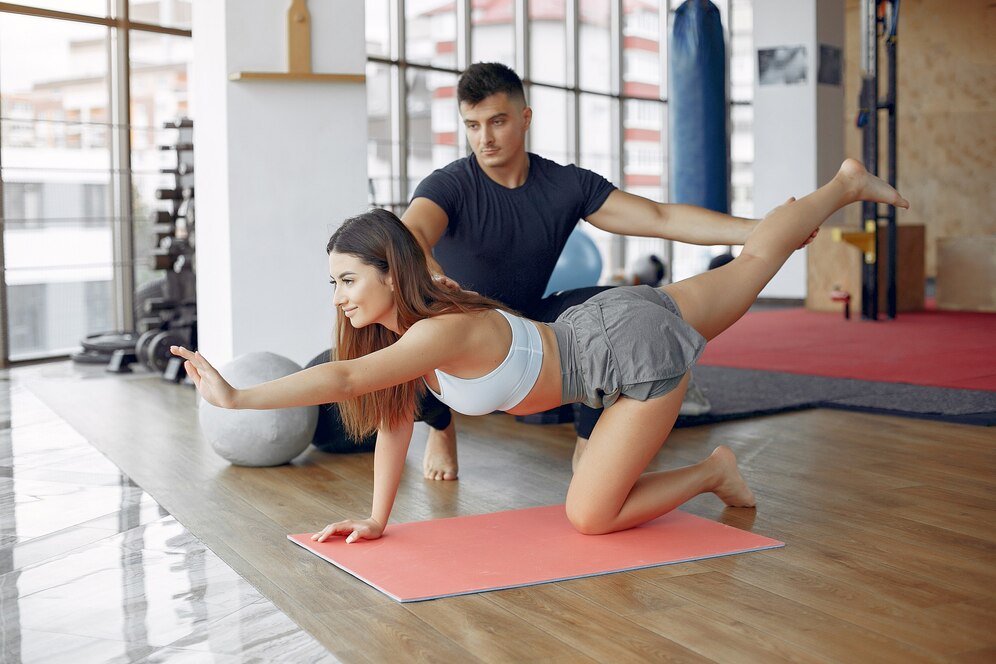
Yoga, an ancient practice known for its myriad benefits to the body and mind, has evolved significantly over time. Among the most exciting developments in the world of yoga is the rise of extreme partner poses, which combine strength, flexibility, balance, and trust between two practitioners. These advanced poses, often referred to as acro yoga or partner yoga, take traditional yoga to new heights, offering a unique blend of challenge and connection.

This comprehensive guide delves into some of the most impressive and demanding extreme yoga poses for two people. We’ll explore the benefits of these poses, the techniques required, and essential safety tips to ensure a successful and injury-free practice.

Flying Lotus Pose

Description

The Flying Lotus Pose is a striking and advanced partner yoga pose that combines balance, strength, and trust. In this pose, one partner, known as the base, lies on their back with their legs lifted vertically, creating a stable platform. The other partner, called the flyer, balances on the base’s legs, extending their body outward with arms and legs fully extended.

To execute the Flying Lotus Pose, the base partner starts by lying flat on their back with legs extended upwards. They need to engage their core and ensure their legs are aligned and stable. The flyer partner then places their feet on the base’s hips or thighs and carefully lifts their body into the air, spreading their arms and legs to form a lotus-like position.

This pose requires both partners to work closely together. The base must maintain strong core muscles and stability to support the flyer, while the flyer needs flexibility and balance to hold their elevated position. Proper communication and alignment are crucial to ensure both partners are comfortable and balanced.

The Flying Lotus Pose offers numerous benefits, including improved core strength, flexibility, and coordination. It also fosters a deeper sense of trust and connection between partners. Due to the complexity and demands of the pose, practicing with a spotter or using safety mats is recommended to prevent injuries and ensure a successful practice.

Benefits

  • Enhanced Trust and Communication: Successfully performing the Flying Lotus Pose requires both partners to communicate effectively and trust each other completely.
  • Core Strength and Flexibility: The base partner must have a strong core to lift and support the flyer, while the flyer needs flexibility and core strength to maintain balance.
  • Improved Balance and Coordination: Both partners work on their balance and coordination, making this pose a full-body workout.

Techniques

  1. Preparation: Both partners should warm up thoroughly before attempting this pose. Focus on stretching the hamstrings, hips, and core.
  2. Base Position: The base partner lies flat on their back with their legs extended upwards. They should keep their legs close together and maintain a strong core.
  3. Flyer Position: The flyer starts by positioning their feet on the base partner’s hips or thighs. Gradually, the flyer lifts their body into the air, extending their legs and arms outward.
  4. Alignment: Both partners should ensure proper alignment to maintain balance. The flyer must keep their body straight, while the base partner should engage their core to provide stability.
  5. Communication: Constant verbal and non-verbal communication is crucial for adjusting positions and ensuring comfort.

Double Plank Pose

Description

The Double Plank Pose is an advanced partner yoga pose that requires exceptional strength, balance, and coordination. This challenging pose involves both partners holding a plank position simultaneously, with one partner’s feet resting on the other’s back or shoulders.

To perform the Double Plank Pose, both partners begin in a traditional plank position, facing each other. The bottom partner supports their body weight with their hands and toes, keeping their body in a straight line from head to heels. The top partner then carefully places their feet on the bottom partner’s back or shoulders, aligning their body in a plank position as well.

Achieving this pose demands strong core muscles and upper body strength from both partners. The base partner must have a stable core and shoulders to support the top partner’s weight, while the top partner needs to maintain balance and alignment to stay steady. Effective communication between partners is essential to adjust positions and maintain comfort and stability.

The Double Plank Pose enhances upper body and core strength, improves balance, and fosters teamwork and synchronization. It’s a visually impressive pose that highlights the importance of coordination and mutual trust in partner yoga. To ensure safety, it’s advisable to practice with a spotter or use safety mats, especially when attempting the pose for the first time.

Benefits

  • Upper Body and Core Strength: Both partners build upper body and core strength as they hold the plank position.
  • Stability and Balance: The pose enhances stability and balance, requiring both partners to work in unison.
  • Teamwork and Synchronization: The pose fosters a sense of teamwork and coordination, as both partners must move and hold their positions together.

Techniques

  1. Starting Position: Both partners begin in a plank position, facing each other with arms extended and bodies in a straight line.
  2. Positioning: The top partner carefully places their feet on the bottom partner’s back or shoulders. They must ensure their feet are balanced and centered.
  3. Core Engagement: Both partners should engage their core muscles to maintain stability. The top partner needs to balance their weight evenly.
  4. Breathing: Coordinated breathing helps maintain balance and reduces strain. Both partners should inhale and exhale together to synchronize their movements.

Tandem Handstand

Description

The Tandem Handstand is a visually impressive and demanding partner yoga pose that exemplifies the heights of acro yoga. This advanced pose requires both partners to execute handstands simultaneously, either facing each other or positioned back-to-back. It combines strength, balance, coordination, and a high level of trust between the practitioners.

To achieve the Tandem Handstand, the base partner starts by getting into a stable handstand position, with their body fully extended and their core engaged. Their legs provide the primary support for the flyer partner. The flyer then lifts into a handstand, either aligning their body with the base partner’s or positioning themselves back-to-back. Both partners must coordinate their movements closely, as the flyer relies on the base partner’s stability and strength to maintain the pose.

The Tandem Handstand enhances upper body strength and core stability for both partners. It requires precise alignment and balance, as any deviation can disrupt the pose. The base partner must have strong shoulders and a stable core to support the flyer effectively. Conversely, the flyer needs excellent balance and control to maintain their position and coordinate with the base partner.

Communication is crucial in the Tandem Handstand. Both partners must maintain clear verbal and non-verbal cues to adjust positions and ensure comfort. It’s also essential to practice the pose with a spotter or use safety mats to minimize the risk of falls or injuries.

Mastering the Tandem Handstand not only showcases physical strength and balance but also deepens the connection and trust between partners. It’s a testament to the harmony achieved through advanced partner yoga practices.

Benefits

  • Upper Body Strength and Flexibility: The pose strengthens the shoulders, arms, and core, while also improving flexibility.
  • Balance and Spatial Awareness: Performing a handstand enhances spatial awareness and balance.
  • Trust Building: The pose requires a high level of trust and communication between partners.

Techniques

  1. Preparation: Both partners should be proficient in handstands before attempting the tandem version. Practice individual handstands and strengthen your shoulders and core.
  2. Positioning: The base partner starts in a handstand position, providing support with their legs or feet. The flyer partner then lifts into a handstand, positioning their body either facing or back-to-back with the base partner.
  3. Support and Balance: The base partner should use their legs to stabilize the flyer. Both partners need to focus on alignment and balance to hold the pose.
  4. Spotting: It’s advisable to have a spotter or use safety mats to prevent falls and injuries.

Partner Tree Pose

Description

The Partner Tree Pose is a dynamic and balancing partner yoga pose that enhances stability, coordination, and connection between two practitioners. In this pose, one partner performs a tree pose while the other partner provides support, either by holding their hands or assisting with their balance.

To execute the Partner Tree Pose, both partners start by standing facing each other. One partner, the balancing partner, lifts one leg and places the foot against their inner thigh or calf, as in a traditional tree pose. The supporting partner stands close, either holding the balancing partner’s hands or assisting with their balance by placing a hand on their shoulder or back.

The balancing partner must engage their core and maintain a steady stance to hold the tree pose while the supporting partner provides stability and support. Effective communication is crucial, as both partners need to coordinate their movements and adjustments to stay balanced.

This pose offers several benefits, including improved balance, leg and core strength, and a sense of partnership and teamwork. It helps both partners develop better coordination and support each other through the practice. The Partner Tree Pose is also visually appealing and reinforces the bond between the practitioners.

Benefits

  • Balance and Coordination: The pose enhances balance and coordination, requiring both partners to work together to maintain stability.
  • Leg and Core Strength: The balancing partner strengthens their legs and core muscles while maintaining the pose.
  • Connection and Support: The pose fosters a deeper connection between partners, as they support each other throughout the practice.

Techniques

  1. Starting Position: Both partners stand facing each other. The balancing partner lifts one leg and places their foot against their inner thigh or calf.
  2. Support: The supporting partner holds the balancing partner’s hands or shoulders for stability. They should maintain a strong and steady stance.
  3. Alignment: Both partners should align their bodies and engage their core muscles to stay balanced.
  4. Breathing: Coordinate breathing to help maintain balance and focus. Both partners should inhale and exhale together.

Reverse Star Pose

Description

The Reverse Star Pose is an advanced partner yoga pose known for its striking visual impact and challenging balance requirements. In this pose, one partner, the base, supports the other partner, the flyer, in a suspended star-like position. The base partner lies on their back with legs extended upward, while the flyer balances above, spreading their arms and legs outward to form a star shape.

To achieve the Reverse Star Pose, the base partner starts by lying flat on their back with their legs lifted and feet pointed towards the sky. The flyer then carefully positions themselves by placing their feet on the base partner’s hips or thighs and lifts into an elevated position. The flyer extends their arms and legs outward, creating a star shape while the base partner uses their core strength and legs to support the flyer.

This pose requires significant core strength, balance, and flexibility from both partners. The base partner must maintain stability and engage their core to provide adequate support, while the flyer needs to manage their balance and alignment to hold the pose. Effective communication and coordination are essential to adjust positions and ensure comfort and safety.

The Reverse Star Pose offers benefits such as improved core strength, flexibility, and balance. It also fosters a deeper sense of trust and connection between partners. Due to its complexity, practicing with safety mats and a spotter is advisable to prevent injuries and ensure a successful practice.

Benefits

  • Core Strength and Flexibility: Both partners develop core strength and flexibility as they hold the pose.
  • Trust and Coordination: The pose requires a high level of trust and coordination between partners.
  • Visual Impact: The Reverse Star Pose is visually impressive and creates a striking effect.

Techniques

  1. Base Position: The base partner starts in a strong, stable position with legs spread wide. They should engage their core and keep their body aligned.
  2. Flyer Position: The flyer partner lifts into the air, extending their arms and legs outward to form a star shape.
  3. Support: The base partner uses their legs and arms to support the flyer. Both partners should focus on maintaining balance and alignment.
  4. Communication: Effective communication is key to adjusting positions and ensuring comfort throughout the pose.

Flying Dolphin Pose

Description

The Flying Dolphin Pose is an advanced partner yoga pose that combines balance, strength, and coordination. This pose involves one partner, the base, supporting the other partner, the flyer, in an elevated, dolphin-like position. It requires significant strength and trust from both partners to achieve and maintain the pose.

To perform the Flying Dolphin Pose, the base partner starts by assuming a dolphin pose, which is similar to a forearm plank but with the hips lifted. The base partner must stabilize their position by engaging their core and keeping their legs strong and straight. The flyer then positions themselves by placing their hands or feet on the base partner’s hips or shoulders, lifting their body into the air.

In this pose, the flyer extends their legs and arms outward, resembling a dolphin in flight, while the base partner provides the necessary support. Both partners must work together to maintain balance and alignment. The flyer needs to manage their balance and keep their body aligned, while the base partner must engage their core and maintain stability to support the flyer effectively.

The Flying Dolphin Pose enhances core strength, balance, and flexibility for both partners. It also requires effective communication and coordination to ensure a successful and safe practice. Due to its advanced nature, practicing with a spotter or safety mats is recommended to prevent falls and injuries.

Benefits

  • Core and Upper Body Strength: The pose builds strength in the core and upper body for both partners.
  • Flexibility and Balance: The flyer gains flexibility and balance while being supported by the base.
  • Trust and Coordination: Successful execution requires trust and coordination between partners.

Techniques

  1. Base Position: The base partner starts in a dolphin pose, with forearms on the ground and legs extended.
  2. Flyer Position: The flyer positions their feet on the base partner’s hips or shoulders and lifts into an elevated position.
  3. Alignment: Both partners need to maintain proper alignment and engage their core muscles for stability.
  4. Breathing: Coordinate breathing to help maintain balance and focus during the pose.

Partner Wheel Pose

Description

The Partner Wheel Pose is an advanced partner yoga pose that showcases flexibility, strength, and collaboration between two practitioners. It involves one partner performing a wheel pose (or upward bow pose) while the other partner assists and supports in a complementary position. This pose is visually striking and requires careful coordination and trust.

To perform the Partner Wheel Pose, follow these steps:

  • Base Partner Preparation: The base partner begins by lying on their back with their knees bent and feet flat on the floor. They then place their hands beside their head, fingers pointing towards their shoulders.
  • Wheel Pose Execution: The base partner lifts their hips and chest off the ground, pressing into the floor with their hands and feet to form an arch, or wheel shape. This is the traditional wheel pose, which stretches the front of the body and strengthens the back.
  • Flyer Partner Positioning: The flyer partner stands or kneels near the base partner’s feet. They then carefully place their hands on the base partner’s feet or legs, assisting in holding and stabilizing the wheel pose. Alternatively, they can support the base partner’s shoulders or hips for additional balance.
  • Balancing and Adjustment: Both partners need to coordinate their movements carefully. The flyer provides support to help the base partner maintain their position while ensuring their own balance and alignment. The base partner must engage their core and legs to keep the wheel pose stable.

The Partner Wheel Pose enhances flexibility, core strength, and upper body strength. It also fosters a deep sense of trust and communication between partners. Due to its complexity and the potential for strain, practicing with safety mats and a spotter is advisable to prevent injuries and ensure a successful practice.

Benefits

  • Strength and Flexibility: Both partners enhance their strength and flexibility, particularly in the back, shoulders, and legs.
  • Balance and Coordination: The pose improves balance and coordination as partners work together.
  • Connection and Support: The pose fosters a sense of connection and support between partners.

Techniques

  1. Base Position: The base partner performs a wheel pose, with hands and feet on the ground and body arched upward.
  2. Support: The second partner assists by holding the base partner’s legs or providing additional support.
  3. Alignment: Both partners should focus on alignment and engage their core muscles.
  4. Breathing: Coordinated breathing helps maintain balance and reduce strain during the pose.

Safety Tips for Extreme Partner Yoga

1. Start with the Basics

  • Build a Foundation: Ensure both partners have a solid grasp of basic yoga poses and partner poses before attempting advanced or extreme poses. Strength, flexibility, and balance in simpler poses will support a safer practice of advanced poses.

2. Warm Up Thoroughly

  • Pre-Pose Warm-Up: Engage in a comprehensive warm-up to prepare your muscles and joints. Focus on areas that will be heavily used in the extreme poses, such as shoulders, hips, and core.

3. Communicate Clearly

  • Effective Communication: Maintain open and clear communication with your partner throughout the practice. Discuss each step, provide feedback, and use verbal and non-verbal cues to coordinate movements.

4. Use Proper Alignment

  • Alignment Awareness: Ensure that both partners are correctly aligned to avoid unnecessary strain. Misalignment can lead to imbalances and potential injuries. Proper alignment helps in maintaining stability and balance.

5. Practice with a Spotter

  • Spotter Support: Especially when learning or trying advanced poses, have a spotter present. A spotter can provide additional support and help prevent falls or adjustments that may be difficult for the practicing partners.

6. Use Safety Mats

  • Protective Mats: Use yoga mats or soft flooring to cushion falls and reduce impact. Safety mats can help prevent injuries if partners lose balance or fall.

7. Strengthen Core Muscles

  • Core Stability: A strong core is essential for maintaining balance and stability in extreme poses. Regularly incorporate core-strengthening exercises into your practice to support complex partner poses.

8. Know Your Limits

  • Limit Awareness: Be aware of your and your partner’s physical limits. Do not push beyond your comfort zone or capabilities. Respecting these limits helps prevent injuries and ensures a safe practice.

9. Gradual Progression

  • Progress Gradually: Approach advanced poses progressively. Start with simpler variations and build up to more complex poses as strength, flexibility, and coordination improve.

10. Stay Focused and Present

  • Mindful Practice: Stay focused and present during your practice. Distracted or rushed movements increase the risk of misalignment and accidents.

11. Listen to Your Body

  • Body Awareness: Pay attention to any signs of discomfort or pain. If a pose feels wrong or painful, stop and adjust. Avoid pushing through pain, as it can lead to serious injuries.

12. Post-Practice Cool Down

  • Cool Down: After completing extreme poses, perform a cool-down routine to stretch and relax the muscles used. This helps in recovery and reduces the risk of muscle stiffness or strain.

By following these safety tips, partners can enjoy the benefits of extreme yoga poses while minimizing the risk of injury and ensuring a safe and rewarding practice.

Conclusion

Extreme yoga poses for two offer a unique and challenging way to deepen your yoga practice and strengthen the bond between partners. By exploring these advanced poses, you not only enhance your physical abilities but also build trust, communication, and coordination. Remember to approach these poses with caution, prioritize safety, and enjoy the journey of practicing extreme partner yoga.

FAQ: Extreme Yoga Poses for Two

1. What are extreme yoga poses for two?

Extreme yoga poses for two are advanced partner poses that require a high level of strength, flexibility, balance, and trust between partners. These poses often involve intricate balancing, lifting, and holding techniques, challenging both participants to work in sync.

2. Do I need to be an advanced yogi to try these poses?

Yes, extreme yoga poses generally require advanced yoga skills. Both partners should have a strong foundation in yoga, including balance, strength, and flexibility, before attempting these poses. It’s advisable to practice these poses under the guidance of an experienced yoga instructor.

3. What are some examples of extreme yoga poses for two?

Some examples include:

  • Flying Warrior Pose: One partner balances on one leg while the other lifts them into the air.
  • Double Handstand Pose: Both partners perform handstands and hold each other’s hands.
  • Bird of Paradise: One partner holds a balancing pose while the other supports and lifts their leg.
  • Scorpion Pose: One partner performs an inverted handstand with their feet touching their head, while the other provides support.
  • Reverse Plank with Partner Leg Lift: One partner holds a reverse plank while the other lifts their legs.

4. What should I consider before attempting these poses?

Before attempting extreme yoga poses:

  • Assess Your Skills: Ensure you and your partner have the necessary strength, flexibility, and balance.
  • Warm Up: Perform a thorough warm-up to prevent injuries.
  • Use Props: Utilize yoga mats, blocks, or walls for extra support.
  • Communicate: Maintain clear communication with your partner to coordinate movements.
  • Practice Safety: Consider practicing under the supervision of a qualified yoga instructor to ensure proper technique and safety.

5. How can I safely practice extreme partner yoga poses?

To practice safely:

  • Start Slowly: Begin with simpler partner poses and gradually progress to more advanced ones.
  • Communicate Clearly: Discuss each movement with your partner to ensure synchronization.
  • Use Spotting Techniques: Have one partner act as a spotter to provide support and stability.
  • Listen to Your Body: Avoid pushing beyond your limits and take breaks if needed.

6. What are the benefits of practicing extreme yoga poses for two?

The benefits include:

  • Improved Strength: Builds muscular strength and endurance in both partners.
  • Enhanced Flexibility: Increases flexibility through advanced stretching and holding techniques.
  • Greater Balance: Develops better balance and coordination.
  • Increased Trust: Strengthens the bond and trust between partners.
  • Enhanced Communication: Improves communication and teamwork skills.

7. Can extreme yoga poses be modified for beginners?

Yes, many extreme poses can be modified to suit different skill levels. Beginners can start with simpler variations or use props for support. As strength and flexibility improve, they can gradually progress to more advanced versions of the poses.

8. What should I do if I experience discomfort or pain during these poses?

If you experience discomfort or pain:

  • Stop Immediately: Cease the pose and assess the cause of the discomfort.
  • Rest and Recover: Allow your body time to rest and recover.
  • Seek Guidance: Consult with a yoga instructor or physical therapist for advice and modifications.
  • Avoid Pushing Through Pain: Never push through pain as it may lead to injury.

9. Can these poses be performed alone or do I always need a partner?

Extreme yoga poses for two are specifically designed for partner practice. While some elements of the poses may be adapted for solo practice, the essence of these poses relies on the interaction and support between partners.

10. How often should I practice extreme partner yoga poses?

Practicing extreme partner poses should be balanced with other forms of yoga and physical activity. It’s important to listen to your body and avoid overtraining. Incorporate these poses into your practice a few times a week, allowing time for recovery and other exercises.

Makarasana (Crocodile Pose): An In-Depth Guide

Makarasana, also known as the Crocodile Pose, is a restorative yoga posture that has profound physical, mental, and emotional benefits. This pose, known for its resemblance to a resting crocodile, is a powerful tool in yoga practice for promoting relaxation and relieving stress. In this comprehensive guide, we will explore the intricacies of Makarasana, including its history, benefits, how to perform it correctly, variations, contraindications, and its importance in modern yoga practice.

Understanding Makarasana

Makarasana, derived from the Sanskrit words “Makara” meaning crocodile, and “asana” meaning pose, is a simple yet deeply effective yoga posture. This pose is categorized as a restorative posture and is often practiced at the end of a yoga session or during moments when the body needs to relax and recuperate. Unlike many other yoga poses that require significant physical exertion, Makarasana is more focused on providing deep relaxation and allowing the body to release tension.

In Makarasana, the practitioner lies flat on their stomach with their arms stretched forward and their head resting on their crossed forearms. The legs are kept slightly apart, with the heels pointing inwards and the toes pointing outwards. This pose encourages a gentle arch in the lower back, promoting relaxation and ease in the muscles.

Historical Background of Makarasana

The origins of Makarasana can be traced back to ancient yogic practices, where it was often used as a preparatory pose or as a means of concluding a yoga session. The pose is believed to have been inspired by the calm and composed nature of a crocodile resting on the water’s surface. In yogic philosophy, the crocodile symbolizes strength, stability, and the ability to remain calm in challenging situations, making Makarasana a powerful tool for cultivating these qualities.

Makarasana

Ancient yogis recognized the importance of relaxation in achieving a balanced state of mind and body. Makarasana was thus incorporated into yoga practice as a way to provide the body with a moment of rest, allowing for the integration of the benefits gained from more strenuous postures. The pose has since evolved and is now widely practiced in various yoga traditions around the world.

The Physical Benefits of Makarasana

Makarasana offers a range of physical benefits that contribute to overall well-being. One of the primary benefits of this pose is its ability to relieve tension in the lower back. By gently arching the spine and allowing the muscles to relax, Makarasana helps alleviate discomfort and pain in the lower back, making it an ideal posture for individuals suffering from conditions such as sciatica or chronic back pain.

Another significant benefit of Makarasana is its ability to improve posture. The pose encourages the practitioner to align their spine correctly, which helps in developing a better posture over time. Additionally, Makarasana stretches the muscles of the chest and shoulders, helping to release any tightness or stiffness in these areas.

This pose also aids in improving respiratory function. By opening up the chest and allowing for deep, diaphragmatic breathing, Makarasana enhances lung capacity and oxygen intake. This is particularly beneficial for individuals with respiratory issues or those looking to improve their overall lung health.

The Mental and Emotional Benefits of Makarasana

While Makarasana is primarily known for its physical benefits, it also has a profound impact on mental and emotional well-being. One of the most significant mental benefits of Makarasana is its ability to reduce stress and anxiety. The pose encourages deep relaxation, which activates the parasympathetic nervous system, promoting a state of calm and tranquility. This makes Makarasana an effective tool for managing stress and anxiety in daily life.

Makarasana also helps in improving concentration and focus. By calming the mind and allowing the practitioner to connect with their breath, this pose enhances mental clarity and sharpens concentration. It provides a moment of stillness, allowing the mind to rest and rejuvenate, which is particularly beneficial for individuals who lead busy and stressful lives.

Emotionally, Makarasana can help in releasing pent-up emotions and tension. The pose encourages the practitioner to let go of any negative emotions or thoughts, creating space for positive energy to flow. This can lead to a greater sense of emotional balance and well-being.

Makarasana-Crocodile-Pose

How to Perform Makarasana Correctly

To reap the full benefits of Makarasana, it is essential to perform the pose correctly. Here is a step-by-step guide to practicing Makarasana:

Step 1: Preparation

  • Begin by lying flat on your stomach on a yoga mat. Ensure that your legs are slightly apart, with your heels pointing inwards and your toes pointing outwards.

Step 2: Positioning the Arms

  • Stretch your arms forward, then cross them in front of you. Rest your forehead on your crossed forearms, allowing your neck and shoulders to relax completely.

Step 3: Engaging the Spine

  • Allow your lower back to form a gentle arch by slightly lifting your chest off the mat. Ensure that the arch is comfortable and not strained. Your pelvis should remain grounded on the mat.

Step 4: Breathing

  • Close your eyes and take deep, slow breaths. Focus on your breath and allow your body to sink deeper into the pose with each exhalation.

Step 5: Holding the Pose

  • Remain in this position for 5 to 10 minutes, or as long as is comfortable. Focus on relaxing your entire body and letting go of any tension.

Step 6: Releasing the Pose

  • To come out of Makarasana, gently lift your head off your forearms, bring your arms back to your sides, and slowly roll onto your back.

Common Mistakes to Avoid in Makarasana

While Makarasana is a relatively simple pose, there are some common mistakes that practitioners should avoid to ensure they are getting the most out of the pose:

1. Overarching the Lower Back: While a gentle arch in the lower back is beneficial, overarching can lead to discomfort or strain. Ensure that the arch is natural and comfortable.

2. Tension in the Neck and Shoulders: The purpose of Makarasana is to promote relaxation, so it is important to release any tension in the neck and shoulders. Make sure your head is comfortably supported by your forearms.

3. Incorrect Leg Position: The legs should be slightly apart with the heels pointing inwards and the toes pointing outwards. This positioning helps in promoting relaxation and reducing tension in the lower back.

4. Shallow Breathing: Deep, diaphragmatic breathing is crucial in Makarasana. Avoid shallow breathing and focus on taking full, deep breaths to enhance relaxation and oxygen intake.

yoga-teacher-training-bali

Variations of Makarasana

Makarasana can be modified or adapted to suit different needs and levels of practice. Here are a few variations of the pose:

1. Supported Makarasana: For individuals with limited flexibility or those recovering from injury, a bolster or folded blanket can be placed under the chest for additional support. This variation helps in maintaining the gentle arch in the lower back without straining the muscles.

2. Makarasana with Leg Stretch: To enhance the stretch in the lower back and hamstrings, one leg can be stretched straight back while the other remains in the traditional Makarasana position. This variation provides a deeper stretch and can help in releasing tension in the legs and lower back.

3. Dynamic Makarasana: In this variation, the practitioner alternates lifting one leg at a time while holding the traditional Makarasana pose. This dynamic movement helps in strengthening the lower back and glutes while maintaining the relaxing benefits of the pose.

Contraindications and Precautions

While Makarasana is generally safe for most practitioners, there are a few contraindications and precautions to keep in mind:

1. Lower Back Injuries: Individuals with severe lower back injuries or conditions should avoid Makarasana or perform it under the guidance of a qualified yoga instructor.

2. Pregnancy: Pregnant women should avoid lying on their stomachs, especially in the later stages of pregnancy. Alternative restorative poses can be practiced instead.

3. Neck and Shoulder Issues: If you have any neck or shoulder issues, be cautious when resting your head on your forearms. Ensure that your neck and shoulders are relaxed and supported.

4. High Blood Pressure: While Makarasana is generally relaxing, individuals with high blood pressure should practice this pose with caution and avoid holding their breath.

Integrating Makarasana into Your Yoga Practice

Makarasana can be integrated into your yoga practice in various ways:

1. As a Restorative Pose: Makarasana can be used as a restorative pose at the end of a yoga session to promote relaxation and help the body recuperate from more intense postures.

2. As a Warm-Up Pose: Practicing Makarasana at the beginning of a session can help in gently warming up the lower back and preparing the body for more challenging poses.

3. As a Standalone Practice: Makarasana can be practiced on its own as a way to relax and unwind after a long day. It can be particularly beneficial before bedtime to promote restful sleep.

4. In Pranayama Practice: Makarasana can be combined with pranayama (breathing exercises) to enhance the benefits of deep breathing and promote mental clarity.

yoga-teacher-training (37)

The Role of Makarasana in Modern Yoga

In modern yoga practice, Makarasana plays an essential role in promoting relaxation and balance. In a world where stress and anxiety are prevalent, restorative poses like Makarasana are increasingly important for mental and emotional well-being. This pose offers a moment of stillness and tranquility, allowing practitioners to reconnect with themselves and cultivate a sense of inner peace.

Moreover, Makarasana’s emphasis on proper alignment and relaxation makes it an ideal pose for beginners and advanced practitioners alike. It serves as a reminder that yoga is not just about physical exertion but also about finding harmony within the body and mind.

Makarasana and Therapeutic Yoga

Makarasana is often used in therapeutic yoga to address various physical and mental health conditions. Its ability to alleviate lower back pain, improve posture, and reduce stress makes it a valuable tool in therapeutic settings. Yoga therapists may incorporate Makarasana into personalized yoga sequences for individuals dealing with chronic pain, anxiety, or sleep disorders.

Furthermore, Makarasana can be beneficial for individuals recovering from injuries or surgeries. Its gentle nature allows for safe practice, even for those with limited mobility or flexibility.

Makarasana and Mindfulness

Makarasana provides an excellent opportunity to practice mindfulness. By focusing on the breath and the sensations in the body, practitioners can cultivate a deeper awareness of the present moment. This mindfulness practice can help in reducing stress, improving concentration, and fostering a greater sense of self-awareness.

Incorporating mindfulness into Makarasana can also enhance its emotional benefits. By observing thoughts and emotions without judgment, practitioners can release any negative energy and create space for positive feelings.

Makarasana in Different Yoga Traditions

Makarasana is practiced in various yoga traditions, each with its unique approach and emphasis. In Hatha Yoga, Makarasana is often used as a restorative pose to balance the body and mind after more vigorous practices. In Iyengar Yoga, the pose may be practiced with props to ensure proper alignment and support.

In Restorative Yoga, Makarasana is a staple pose for promoting deep relaxation and rejuvenation. The pose may be held for extended periods, allowing the body to enter a state of deep rest.

Regardless of the tradition, Makarasana remains a powerful pose for relaxation and healing.

Conclusion: Embracing the Power of Makarasana

Makarasana, the Crocodile Pose, is a simple yet profoundly effective yoga posture that offers a wide range of physical, mental, and emotional benefits. Whether you are looking to alleviate lower back pain, reduce stress, improve posture, or simply find a moment of peace, Makarasana provides the tools to achieve these goals.

Incorporating Makarasana into your regular yoga practice can lead to greater overall well-being and a deeper connection to yourself. By embracing the power of this restorative pose, you can cultivate a sense of calm, balance, and harmony in your life.

So, the next time you find yourself in need of relaxation or seeking to release tension, take a few moments to practice Makarasana. Allow yourself to rest like a crocodile on the water’s surface, and experience the transformative benefits of this beautiful yoga pose.

yoga-school-in-bali (4)

Makarasana (Crocodile Pose) FAQ

1. What is Makarasana?

Makarasana, also known as the Crocodile Pose, is a restorative yoga pose where the practitioner lies on their stomach with their head resting on their crossed forearms, and legs slightly apart. It promotes deep relaxation, especially in the lower back and shoulders, and is often used at the end of a yoga session.

2. What are the benefits of practicing Makarasana?

Makarasana offers several benefits, including:

  • Relief from lower back pain: The gentle arch in the spine alleviates tension.
  • Improved posture: Encourages proper spinal alignment.
  • Stress reduction: Promotes relaxation by activating the parasympathetic nervous system.
  • Better breathing: Expands the chest, enhancing lung capacity and oxygen intake.
  • Mental clarity: Calms the mind, improving focus and concentration.

3. How do I correctly perform Makarasana?

To perform Makarasana:

  • Lie flat on your stomach with legs slightly apart.
  • Cross your arms in front of you and rest your forehead on your forearms.
  • Allow your lower back to form a gentle arch by slightly lifting your chest off the mat.
  • Close your eyes and breathe deeply, staying in the pose for 5-10 minutes.
  • To release, gently lift your head and return to a neutral position.

4. Can beginners practice Makarasana?

Yes, Makarasana is suitable for beginners due to its simple and restorative nature. It does not require any advanced flexibility or strength, making it accessible to everyone.

5. Are there any common mistakes to avoid in Makarasana?

Common mistakes to avoid include:

  • Overarching the lower back: Maintain a gentle, comfortable arch.
  • Tension in the neck and shoulders: Ensure these areas are relaxed.
  • Incorrect leg positioning: Keep heels pointing inwards and toes pointing outwards.
  • Shallow breathing: Focus on deep, diaphragmatic breathing.

6. What variations of Makarasana can I try?

Some variations include:

  • Supported Makarasana: Place a bolster under the chest for additional support.
  • Makarasana with Leg Stretch: Stretch one leg back while the other remains in position.
  • Dynamic Makarasana: Alternate lifting each leg while holding the pose to strengthen the lower back.

7. Who should avoid practicing Makarasana?

Individuals with the following conditions should practice caution or avoid Makarasana:

  • Severe lower back injuries
  • Pregnancy, especially in the later stages
  • Neck and shoulder issues
  • High blood pressure (consult a yoga instructor or doctor)

8. How long should I hold Makarasana?

Makarasana can be held for 5-10 minutes, or longer if comfortable. The duration depends on your level of comfort and the specific purpose of your practice, such as relaxation or therapeutic benefits.

9. Can Makarasana help with sleep issues?

Yes, Makarasana promotes deep relaxation and can help in reducing stress and anxiety, which are common causes of sleep disturbances. Practicing this pose before bedtime can aid in improving sleep quality.

10. How does Makarasana compare to Savasana (Corpse Pose)?

While both Makarasana and Savasana are restorative poses aimed at promoting relaxation, they differ in positioning. Savasana is performed lying on the back, while Makarasana is done lying on the stomach. Makarasana is particularly beneficial for relieving lower back tension, whereas Savasana is often used for full-body relaxation.

11. Can Makarasana be included in a daily yoga routine?

Absolutely! Makarasana is a versatile pose that can be incorporated into a daily yoga routine, either as a warm-up, a restorative pose, or as part of a cool-down sequence to promote relaxation and ease tension.

12. Is Makarasana beneficial for people with respiratory issues?

Yes, Makarasana can be beneficial for individuals with respiratory issues as it encourages deep, diaphragmatic breathing and helps in expanding the chest, thereby improving lung capacity and overall respiratory function.

13. Can I practice Makarasana if I have tight shoulders?

Yes, Makarasana can help in releasing tension in the shoulders. Ensure your shoulders are relaxed, and if necessary, use a prop like a rolled blanket under your chest to reduce strain and promote relaxation.

14. Is it normal to feel discomfort in Makarasana?

While Makarasana is a gentle pose, discomfort may arise if the lower back is overarched or if there is tension in the neck and shoulders. Adjust your position, use props for support, and focus on deep breathing to alleviate discomfort.

15. How can I enhance the relaxation benefits of Makarasana?

To enhance relaxation:

  • Practice deep, mindful breathing.
  • Use calming essential oils like lavender.
  • Combine Makarasana with a short meditation.
  • Practice in a quiet, comfortable space with dim lighting.

Gratitude in Yoga: Quotes & Their Powerful Significance

Gratitude is a transformative practice that can significantly enhance our well-being, and it plays a crucial role in yoga. The practice of yoga is not just about physical postures; it also encompasses mental, emotional, and spiritual growth. Incorporating gratitude into your yoga practice can deepen your connection to yourself and the world around you. This article explores the power of gratitude in yoga through a collection of meaningful quotes, examining their significance and how they can enrich your practice.

Understanding Gratitude in Yoga

Gratitude in yoga involves more than acknowledging what we are thankful for; it encompasses a profound appreciation for our experiences, our bodies, and the present moment. It is an attitude that can transform our practice and our lives. Yoga teaches us to cultivate mindfulness and presence, and gratitude enhances this by shifting our focus from what we lack to what we have.

The Connection Between Yoga and Gratitude

Yoga and gratitude are deeply intertwined. Yoga encourages us to be present and to listen to our bodies and minds. When combined with gratitude, this practice can lead to a heightened sense of awareness and contentment. By integrating gratitude into our practice, we acknowledge the gifts of each moment, fostering a positive and receptive mindset.

Key Quotes on Gratitude and Their Meanings

Here, we delve into some powerful gratitude quotes and their relevance to yoga practice:

  • “Gratitude turns what we have into enough.” – Anonymous

This quote highlights the essence of contentment. In yoga, we learn to appreciate our bodies and abilities as they are, without the need for comparison or striving for perfection. Gratitude helps us find contentment in our current state, which is essential for a fulfilling yoga practice.

  • “Inhale love, exhale gratitude.” – Anonymous

This simple yet profound quote reminds us to breathe in positivity and release gratitude with each exhale. In yoga, the breath is central to our practice, and this quote underscores the importance of infusing our breath with positive emotions, enhancing both our physical and emotional well-being.

  • “Gratitude is the most exquisite form of courtesy.” – Jacques Maritain

Maritain’s quote emphasizes that gratitude is not just a feeling but a form of respect and courtesy. In yoga, this translates to respecting our bodies, acknowledging our progress, and appreciating the guidance of our instructors. It also means being grateful for the opportunity to practice and grow.

  • “Gratitude is not only the greatest of virtues but the parent of all others.” – Cicero

Cicero’s insight into gratitude as a foundational virtue aligns with the yogic principle of cultivating virtues through practice. Gratitude fosters humility, compassion, and joy, which are essential qualities in yoga. By nurturing gratitude, we lay the groundwork for other positive attributes to flourish.

  • “Let us be grateful to people who make us happy; they are the charming gardeners who make our souls blossom.” – Marcel Proust

This quote speaks to the importance of recognizing and appreciating those who contribute to our happiness. In yoga, we often encounter supportive communities and teachers who aid our growth. Expressing gratitude towards them enhances our practice and fosters a sense of connection and belonging.

  • “Gratitude is a powerful catalyst for happiness. It’s the spark that lights a fire of joy in your soul.” – Anonymous

Gratitude has the power to ignite joy and happiness, which is a central goal of yoga. By focusing on what we are grateful for, we cultivate a sense of inner joy that fuels our practice and overall well-being.

  • “Gratitude is the fairest blossom which springs from the soul.” – Henry Ward Beecher

Beecher’s quote beautifully describes gratitude as a natural and beautiful expression of the soul. In yoga, this aligns with the idea of self-expression and authenticity. Practicing gratitude helps us connect with our true selves and express our inner beauty.

  • “When you arise in the morning think of what a privilege it is to be alive, to think, to enjoy, to love… then make that day count!” – Anonymous

This quote encourages us to start each day with a sense of privilege and purpose. In yoga, beginning our practice with this mindset can enhance our focus and intention, making each session more meaningful and fulfilling.

  • “In yoga, we learn to cultivate gratitude for our bodies and the present moment.” – Anonymous

This quote directly relates to how yoga fosters gratitude. By being mindful of our bodies and the present moment, we develop a deeper appreciation for our physical and emotional states, which enriches our practice and overall life experience.

  • “Gratitude is the heart’s memory.” – French Proverb

Gratitude serves as a powerful tool for remembering the positive aspects of our lives. In yoga, this memory helps us maintain a positive outlook and appreciate our progress, reinforcing the benefits of our practice.

  • “Be thankful for every moment of your life, for it is in each moment that you have the power to create your destiny.” – Anonymous

This quote emphasizes the importance of cherishing each moment. In yoga, every breath and movement is an opportunity to create positive change. Gratitude for each moment enhances our ability to shape our lives and practice with intention.

  • “The practice of gratitude is the most beautiful path to happiness.” – Anonymous

Gratitude as a practice leads to lasting happiness. In yoga, cultivating gratitude can transform our perspective, helping us find joy and contentment in every aspect of our practice and life.

  • “Gratitude and grace are a beautiful pairing that can transform our everyday lives into extraordinary moments.” – Anonymous

This quote highlights how gratitude and grace together can elevate our everyday experiences. In yoga, embodying these qualities helps us turn ordinary moments into profound and transformative experiences.

  • “As you breathe in, cherish yourself. As you breathe out, cherish others.” – Anonymous

This quote reflects the balance of self-care and compassion. In yoga, it’s important to nurture ourselves while also extending kindness to others. Gratitude helps us appreciate both aspects of our practice and life.

  • “Gratitude is the key to abundance and the doorway to joy.” – Anonymous

Gratitude opens the door to abundance and joy, aligning with the goals of yoga. By focusing on what we are grateful for, we create space for more positivity and fulfillment in our lives.

  • “When we express gratitude, we are opening our hearts to the abundance of the universe.” – Anonymous

Expressing gratitude aligns us with the flow of abundance. In yoga, this openness helps us connect with the universe and receive its gifts more fully.

  • “Yoga teaches us to find peace within ourselves and to be grateful for the present moment.” – Anonymous

Yoga guides us to inner peace and appreciation for the present. Gratitude enhances this practice by focusing our attention on the here and now, fostering a sense of calm and contentment.

  • “Gratitude is the rhythm of the soul; it’s the dance of joy in every breath.” – Anonymous

This quote beautifully captures the essence of gratitude as a soulful rhythm. In yoga, every breath becomes a dance of joy when infused with gratitude, enhancing our overall practice.

  • “Gratitude is the heart’s response to the beauty and abundance of life.” – Anonymous

Gratitude is a natural response to life’s beauty and abundance. Yoga helps us cultivate this response by connecting us with the present moment and the wonders it holds.

  • “Gratitude is the sunshine that makes the soul bloom.” – Anonymous

Gratitude nurtures our inner growth and flourishing. In yoga, this metaphor illustrates how cultivating gratitude can lead to personal and spiritual blossoming.

  • Integrating Gratitude into Your Yoga Practice

To fully experience the benefits of gratitude in yoga, consider incorporating these practices into your routine:

  1. Begin with Gratitude:
    • Start each session by reflecting on what you are grateful for. Set an intention based on this gratitude to guide your practice.
  2. Mindful Breathing:
    • As you move through your poses, focus on your breath and infuse it with gratitude. Let each inhale bring in positive energy and each exhale release gratitude.
  3. Gratitude Journaling:
    • Keep a journal of your yoga practice and jot down what you are grateful for after each session. This can help reinforce positive feelings and track your growth.
  4. Express Thanks:
    • Take a moment to thank yourself for making time for your practice. Acknowledge your effort and commitment, and express gratitude for the benefits you receive.
  5. Cultivate Gratitude Poses:
    • Incorporate poses that promote openness and receptivity, such as heart-opening postures. These can enhance your ability to feel and express gratitude.
  6. Share Your Practice:
    • Share your experiences and insights with others in your yoga community. Expressing gratitude to fellow practitioners and teachers can deepen your connection and foster a supportive environment.
  7. Daily Practice:
    • Make gratitude a part of your daily routine, both on and off the mat. Regularly practice mindfulness and appreciation to cultivate a lasting sense of gratitude.

Conclusion

Gratitude is a powerful practice that can profoundly enhance your yoga experience and overall well-being. By integrating gratitude into your yoga practice, you can foster a deeper connection to yourself, appreciate the present moment, and cultivate a more positive and fulfilling life. The quotes explored in this article serve as reminders of the transformative power of gratitude and offer inspiration for incorporating this practice into your daily routine. Embrace the practice of gratitude, and let it illuminate your yoga journey with joy and contentment.

Important SEO Tips in 2019 You Should Know

In the event that you are a tenderfoot, and you have been searching for On-page SEO tips and different insights about SEO, at that point the main thing that you should think about Search Engine Optimization is that there isn’t any enchantment stunt in it. 

In any case, by following these straightforward On-page SEO tips and deceives, you can have the ability to get your new site on the main page of web crawler monsters, for example, Google, Yahoo, and Bing. 

Understand that web indexes utilize complex calculations to create significant and precise web crawler result page for the clients. Truly, these web index calculations require both, time just as an exertion to be persuaded that your site page or site can get put on one of the top spots. 

The majority of the sites will offer you website improvement deceives that will play better in the hypothetical world yet won’t work in the functional world. Perusing this may irritate you, in any case, that is the truth. The greater part of the site design improvement tips accessible online is excessively old and unimportant that won’t create a gainful outcome for you or your site. In this article, you will get SEO tips that can offer you a quality outcome that works in the genuine world. 

We have tried every one of these tips throughout the year and have ordered these focuses to offer you a better understanding on the components that you should offer significance to while making your on-page SEO systems and techniques. 

You will have a superior and clear comprehension of the rules and regulations of the SEO world. Examine the absolute most significant On-page SEO tips: 

Evacuate Things That Slow Down Your Site: 

A moderate stacking site can without much of a stretch baffle and disheartened individuals from visiting your site and purchasing the item that you are advertising. Different examinations have demonstrated that even a 1-second postponement in page burden time can bring about a 7% loss of traffic. 

With the expansion in mindfulness among the rivals in each industry, open doors that can be created by the utilisation of site improvement has prompted the immense interest for speed. 

Offer Links to Different Sites:

Furnishing connecting to different sites with important substance and information is a basic factor for development in this exceptionally focused virtual world. The facts demonstrate that a few people imagine that connecting to sites with the pertinent substance page will demonstrate to be awful as it will redirect traffic from your site to another site. 

Notwithstanding, in all actuality, we think and have seen that connecting to important substance pages is a standout amongst other site design improvement techniques that will expand traffic to your site as opposed to diminishing it. We also have decided on a similar system to acquire traffic and can say this without a doubt that it really is outstanding amongst other SEO methodologies for the long run, and it will definitely work to support you. 

Continuously Use Unique and Relevant Meta Depictions:

One of the most significant and dismissed On-page SEO tips is none other than a well-made meta-depiction. Know this for a reality that meta-depiction is the main thing that web crawler will serve to the client as the query item and meta-portrayal can make client visit your page just as drive them away. 

A well-created meta-depiction can work to support you and can do ponders for you. Likewise, know that web indexes won’t work to support you on the off chance that you have meta-portrayal duplicated from another webpage. In the event that copying content from another site as your meta-portrayal turns into a normal thing that you will most likely get punished via internet searcher monsters. 

Always Have Readable and Meaningful URLs: 

Simply envision that you have visited a site or a blog, and the URL of that website page isn’t clear and isn’t identified with the substance by miles. At that point, without a doubt, you won’t comprehend where this URL will lead you. On the off chance that an individual can’t get you, at that point expect that a web crawler will likewise be confounded. 

You additionally need to manage the inquiry creepy crawlies, and they will wrap up the errand. Having a one of a kind URL is without a doubt a crucial factor, yet you ought to consider making it a simple to-review, type and web crawler agreeable URL for getting the best outcomes. 

Accompany Special Content for Improving Your Site’s Positioning:

One of the hardest and tedious activities is to make an exceptional and relatable substance. Know this reality, regardless of whether you are a business to business, or business to client advertiser you should be taught and severe with regards to content creation. 

Aside from making content that is relatable and one of a kind, something else that needs your consideration is to keep up the progression of new substance to keep your site’s name in the market. 

Build Your Website Mobile Friendly:

These days, a lot of ventures are completed on cell phones. The quantity of inquiries being done through cell phones is expanding each day, and this reality is increasingly relatable to online buys. 

We can say this without a doubt that subsequent to taking a gander at your site’s systematic information, you will locate a noteworthy lump of visits originating from cell phones. There is a significant point that you should remember and that is having a cell phone application, and having a versatile well-disposed site are two altogether various things.

Yoga Teacher Training India | Yoga Teacher Training Goa

“The individuals who can’t do, instruct,” is a familiar maxim that is relevant in numerous streets of life. At the first place, there’s no such thing as being dreadful at yoga, especially on the off chance that you consider it to be a means of life instead of something to mark off your strategy for your day. What is more, second, the very best yoga teachers are not people who visit a 200 hour preparing and call it good. Rather, they are deep-rooted understudies who make a promise to constant picking up, developing, and advancing. Now, that is what our yoga teacher training in Goa make it happen.

In the event you’re a yoga teacher or a longing one, it is critical to stay focused on your own training and see yourself as an understudy first. Listed below are just a portion of the explanations for why it’s significant to keep it up as long as you can.

There’s an interminable add as much as find out

Possibly the best motivation to keep on contemplating is important that you’ll never be completed learning. Meditation is a long, rich convention spreading over distinct heredity, practices, and ways of thinking. There are a variety of types of yoga, many different ways to handle teaching, and assorted elucidations of writings and thoughts.

Contemplating subjects like life systems and brain science can similarly enable us to each of the more likely get yoga and its possessions. No matter what extent you’ve rehearsed or just how long of preparing you’ve finished, there will consistently be to learn.

The Constant examination will humble you

The more you study yoga, the more you understand how unimaginably enormous it is. What’s more, with the acknowledgement of this infinite, and of what you don’t have the foggiest idea, comes quietude. Our goal for your yoga teacher training in Goa will be to create the best teachers and pioneers of numerous sorts, which typically the individuals who concede that they don’t know everything and are constantly open to another point of view.

A real instructor is not somebody who will specialist each posture in the book, yet somebody who has the tolerance, relentlessness, and empathy to instruct to all degrees and also to see themselves in their understudies, and the understudy in themselves. Best 200 Hour Yoga Teacher Training in Goa, India. Near the beach, Yoga Alliance Certified. Hatha & Vinyasa Yoga. Rooms & meals included.

You will stay aware of new developments

Regardless of the fact that yoga is an antiquated custom, new improvements nevertheless occur consistently. Increasingly more study is being directed on yoga and care, and tailing it may enable you to all of the more inclined to comprehend and clarify the advantages of the training. Join our BEST Yoga Teacher Training Goa to Deepen yoga practice and learn how to teach? 200, 300, 500 Hour Hatha, Ashtanga Vinyasa Yoga TTC Goa.

Our comprehension of the human body is additionally continually developing, so we can keep on refining how postures are taught. New styles of yoga are rising also. While you may not normally concur with them, understanding their intrigue can allow you to associate with your own understudies.

Your Teaching will Stay new and fascinating

In case you educate as often as you can, it very well might be anything but hard to become a trench. Customary understudies may discover classes monotonous, and you might even start to feel tired on your instructing. By proceeding with your training, you’ll be presented to new ideas and styles. 200 hour Yoga Teacher Training in Goa, India is one of the affordable and best place in goa as well in india for yoga teacher training in goa and retreats in india.

Irrespective of whether it is a profound comprehension of lifestyle structures, alternate use of concept, or an imaginative topic for your group, using the option to offer something new can keep both you and your understudies drawn in and inquisitive.

300 Hour Yoga Teacher Training in Goa

Mahamukti Yoga provides 300 Hour Yoga Teacher Training in Goa, is a unique opportunity for yoga aspirants serious about deepening their practice and knowledge of yoga.

What you will learn

At Mahamukti Yoga, you will learn to master the asanas as well as your teaching skills with a 300 hour yoga teacher training course. Besides, you will also be able to deepen your own practice in your preparation to teach others.

Immersing yourself in all the aspects of yoga will calm and relax your mind, body and spirit while preparing you to lead others towards their yogic journey.

Eligibility Requirements

A graduate in 200 hour yoga teacher training certified under Yoga Alliance. If you are not yet one, then we also offer you to complete the same from our yoga school in Goa and go ahead to take the next step above with the 300 hour YTTC.

What’s Different About us

Going Beyond Asana

At our yoga school in Goa, we offer a unique combination of quality with value that goes far beyond just the physical exercise part. Indeed yoga equips the individual with life-transforming tools that exceed the asanas and our yoga school commits to sharing the same with its students.

Learning under the guidance of World-Class Indian Yoga gurus

We are blessed with the presence of our handpicked teachers, keeping in mind the success of our students. Known for their student-friendliness and warmth, our yoga gurus are well-experienced and highly skilled. Under their guidance, you will gain a deeper insight into the ancient practice of yogic sciences.

The Spiritual Aspect

Since its inception in 2015, the yoga school has been upholding the spiritual depth of yoga that remains non-religious as well as non-denominational. We welcome all who aspire to deepen their yogic practice be it physical or spiritual or both even if they may not aim to teach yoga.

Going Beyond the Basics

Rise beyond the level of 200 hour teacher training in Goa to 300 hour and get ready to teach with greater confidence and know-how. Study asanas at an advanced level and learn how to master the basics with added complexities.

While working on your asanas, you will also learn about how to avoid injuries and discover the healing element of yoga to the rescue of helath related issues such as anxiety, backpain, high blood pressure etc.

Going beyond the mat

Just like the 200 hour YTTC, the 300 hour yoga teacher training in Goa been designed to take your limits beyond the yoga mat! Immerse yourself into the yogic lifestyle and live and breathe yoga with renewed energy and enthusiasm.

Learning the Origins of Yoga

Learn about The Yoga Sutras of Pantanjali,under this advanced course at our yoga school in Goa. The study of such ancient texts , the analysis of yoga philosophy – all contribute well to your understanding on the history of yoga and how it is applicable to our lives as well.

Balancing Mind, Body, Spirit

The program lets you discover the balance that dwells in all things. Spend a great time at our yoga school in Goa learning as well as taking your time off to relax, sit back and enjoy the amazing beaches of Goa.

10 Best Yoga Teacher Training in UK

Most of us are aware of the fact that yoga originated in India. However, today this ancient science is being practised all across the world. The UK is one such destination where yoga in traditional and contemporary styles is practised at different locations like Bristol, Leeds, Scotland besides the suburbs of London.

Today, the UK and especially London is now home to a plethora of yoga teacher training UK programs. These yoga studios and yoga schools run extensive yoga TTC programs with the 200-hour yoga teacher training course being the most popular of the yoga courses.

In this blog we have enlisted 10 best yoga teacher training schools in the UK that you can enrol in. Let’s take a look.

Criteria to choose the best yoga teacher training UK course

Before we go about enlisting and detailing different yoga schools in the UK, we have enlisted some important factors that you need to consider before you invest effort, time and money into yoga teacher training in the UK.

Location: The location of your yoga TTC can greatly influence your learning outcome. But, do keep in mind that a beautiful geographical landscape does not compare to the merit of a yoga teacher training course. So, we advise you to look for the quality of the learnings rather than from where the course is taken.

Yoga Trainers: You might be deluged by a number of options pertaining to yoga teacher training in the UK. However a fulfilling yoga teacher training experience lies in the competency of the yoga teachers. Look out for those trainers who are not only masters in their field of teaching but are also enthusiastic about guiding you towards mastering this transformative ancient practice.

Course Details: Seek out details of the curriculum that will be followed at the yoga schools. The course should be carefully and meticulously curated with modules that fulfil your training demands. Besides, there should be a mix of traditional and contemporary practices that bode well with the modern Western lifestyle and culture.

Duration of the course: Learning yoga is a lifelong journey. So don’t be tempted by the lure of programs that claim to cover everything in the shortest possible time. Also, keep in mind that you will need a lot of practice post your month long yoga TTC programs to really become experts in the field. So, we suggest you do not rush through the course but take time out for at least a month for such programs. Alternatively, if you stay in London, then there are also many options of weekend only programs. These weekend-only programs, albeit long-drawn, offer you flexibility and work around your busy schedule.

Booking process: We know that the process of enrolment is not an exciting task. But, the process should be a transparent one where you will be told everything about the course in a candid way. This will help quell your anxieties and save you from potential surprises when you actually join the program.

Price: Always place quality over price as you mull over various options regarding yoga teacher training in the UK. Make decisions backed by solid groundwork and knowing the value of the training. Make smart investments and do not fall for the lure of cheap courses at the cost of quality training.

10 Best Yoga Teacher Training in UK

1.The House of Yoga, London

The House of Yoga is one of the best yoga teacher training UK schools offering primarily the 200-hour yoga teacher training program. This yoga school endeavours to bring forth a holistic transformation of the mind and the body through educative and inspiring practices in yoga. The House of Yoga offers an eight weekend course taught by incorporating an innovative teaching pedagogy and a detailed yet succinct curriculum designed to fulfil learning and training needs.

Besides the foundational concepts of a 200-hour yoga TTC, the program also incorporates the different learnings related to the practical and business aspects of yoga such as creating and buoying up your personal yoga brand through different marketing tactics. Plus, other considerations like the Yoga alliance Professional liability insurance and other aspects involved in a professional yoga practice are also delved upon during the course of the training.

Location: London

Cost: £2600 (Early Bird discount) – £2800

Yoga Format: Yin Yoga, Asana Vinyasa Yoga

2. LKY Yoga School, Aberdeen , Scotland

LKY Yoga Teacher Training School is a community-led yoga educational institution that believes in personal and professional growth of its trainee members. All its courses and workshops lay a strong emphasis on theory and yogic philosophy that allows space for each program participant to develop his or her own style and authentic practice. All the courses offered at the LKY Yoga School are Yoga Alliance certified entailing a worldwide recognition and entitlement to teach yoga anywhere in the world. All kinds of yoga practices, diverse styles and lineages are practised at this school where masterclasses are presided by senior yoga teachers. Individual learning is highlighted at LKY which now also offers a 2 year long, flexible 300-hour yoga teacher training course where students specialise in advanced yoga skills and practices.

However, yoga aspirants need to have at least 2 years of solid yoga practice to enrol in the 200-hour yoga TTC at the LKY Yoga School.

Location: Queens Gardens, Aberdeen, Scotland

Cost: £1300

Yoga Format: Vinyasa Krama, Kundalini, Hatha, Ashtanga

3.The Yoga People Teacher Training, London

Are you looking for a yoga TTC in the intense and traditional Ashtanga Vinyasa yoga format, then look no further beyond the Yoga People yoga studio. The Yoga People is perhaps the best option for aspiring yogis intending to train in the  Ashtanga Vinyasa flow yoga. The curriculum is designed in such a way that gives you flexibility to combine your training with  your preferred choice of locations. Plus, the Yoga People prides itself as one of the best yoga teacher training UK schools due to its widely known and acclaimed mentorship program that guides and supports its students even after the culmination of their yoga TTC from this renowned yoga school. The training happens mostly over the weekends as the course is spread over a period of 3 months. Plus, students have to study an online module on yoga anatomy that is included as part of the course tuition. In all, students have to attend at least 27 hours of yoga classes during the entire duration of the course.

Location : London

Cost: £3100 (Early Bird discount),  £3500 (Flexible payment plans)

Yoga Format: Ashtanga Vinyasa

4.Classical Yoga School, Glasgow

The Classical Yoga School was co-founded in 2003 by June Michell, a well-known name in the yoga circles in Scotland. Known with an erstwhile name of Chi Yoga School, the Classical Yoga School is one UK’s reputed yoga schools specialising in teaching the Ashtanga Vinyasa yoga style. Today, the school has also branched out with its presence felt in the South of England. The yoga school offers a Yoga Alliance accredited 200-hour yoga teacher training in the UK that validates successful students to teach yoga professionally.

The Classical Yoga School’s primary focus is on teaching the Ashtanga Vinyasa primary series supported by training workshops in different yoga formats. The yoga school conducts classes with small batch sizes so that personalised attention is given to students entailing a comprehensive training experience.

Location : Perth, Surrey, Glasgow

Cost: £2,820

Yoga Format: Ashtanga Vinyasa, Vinyasa Flow, Iyengar, and Sivananda style

5. Sivananda Yoga Vedanta Centre, London

The International Sivananda Yoga Vedanta Centre is the biggest yoga school worldwide. The yoga teacher training UK course was first initiated by Swami Vishnudevananda. This learned Guru is credited with introducing yoga to the Western world. In present times,  his senior most disciples have taken the responsibility of teaching yoga at this hallowed place. Nestled in the serene South West London suburb, the Sivananda Yoga Vedanta Centre offers an amiable environment for pursuing yoga teacher training.

The yoga teacher training course is designed as per the ancient system of schooling where students stay, practice and learn yoga like the yogis in Ancient India. The Centre offers support and practical skills that work to enhance  your yoga asana skills. Furthermore, a lot of emphasis is laid upon acing the teaching methodology where ample opportunities for taking yoga classes are given. Also, earn a Yoga Alliance approved certification after you complete this month-long yoga TTC course.

Sivananda Yoga Vedanta Centre besides offering the foundational 200-hour yoga teacher training in the UK, also provides advanced teacher training programs such as the 300-hour or the 500 hour yoga TTC where students gain profound knowledge as they deep dive into topics of Raja Yoga, Vedanta philosophy, Sanskrit and Anatomy and learn advanced skills in asana practices.

Location : London

Cost: £2620 (shared room) – £3340 (double room) – £3600 (single room)

Yoga Format: Hatha

6.Yoga Hero, Leeds

Yoga Hero was founded in 2013 and initially classes took place at different places in Leeds before settling at a tastefully done home in Leeds Dock. The Yoga Hero today comprises three studios with each studio taking yoga classes of varying group sizes. You can find a multitude of diverse range of yoga classes and yoga teacher training UK courses at the Yoga Hero. You can enrol in the 200-hour yoga TTC at this yoga studio especially if you are keen to pursue the Vinyasa flow style of yoga. However, aspiring students should take note that food and accommodation is not provided as part of the training package.

From the basic and foundational courses and workshops to specialised training in Restorative Yoga, Yin Yoga and other advanced training, Yoga Hero has become an alma mater of repute for all levels of practitioners.

Location : Leeds Dock, Leeds

Cost: £2,375

Yoga Format: Vinyasa Flow

7. Sangye Yoga School, London

Sangye Yoga School is one of the best yoga teacher training in London schools. But, yoga aspirants need to keep in mind that the school has uncompromising and strict training classes especially for those participants who want to learn  yoga in a profound way. This yoga teacher training UK course is a closely monitored program conducted over a period of 5 months.

Before you think of joining this intense yoga teacher training program, you will need to have a minimum of 3 years of dedicated yoga practice to become eligible for this course. Besides, students have to attend a formal interview and write an essay on yogic philosophy like the age-old wisdom from the revered Bhagavad Gita. Also, prior to the course commencement, students need to be thorough with anatomy modules taught online and also read up pre-course literature. Once enrolled into the course, students are expected to  maintain a regular yoga asana practice and immerse in daily meditations.

Location: London

Cost: £3200 (early bird discount) – £3700

Yoga format:  Vinyasa, Hatha

8. Bristol School of Yoga, Bristol

Bristol School of Yoga offers an optimal blend of tradition and modern scientific knowledge. The teaching approach here combines the age-old asana practice with profound insights gained from the biomechanical aspects of yoga such as functional training, neurology and strength science. The courses here are truly life-transforming where graduates report high course completion rates. Plus, the students start teaching yoga within just three months of completing the yoga teacher training UK course in Bristol. Things like 2 teachers guiding the 200-hour YTT, confidence building mentor and peer feedback and a discerning eye to celebrate and encourage the subtle differences for gaining finesse in yoga practice are some of the differentiating highlights of this yoga school in Bristol.

Location: Bristol

Cost: £3,270

Yoga format:  Vinyasa Flow, Hatha Flow, and Yin Yoga

9. Elton Yoga, London

Heather Elton spearheads the well-known Elton Yoga, a Yoga Alliance accredited school (RYS). Known as a Yoga Alliance ‘Senior Trainer’, Heather Elton who helms Elton Yoga has brought together innovative scholars and the knowledge of expert yoga teachers in curating the 200 hour yoga teacher training UK program.

But, yoga aspirants should have a minimum of two years of daily yoga practice to sustain the rigours of this course. The stamina and mental discipline developed during prior years of yoga practice come handy as you progress through the yoga TTC program.

Students are expected to deepen their yoga skills as they learn the finer aspects of teaching yoga.

Each class consists of only 16 students and so students can look forward to getting personalised attention during the course. The curriculum that the school follows is detailed and encompasses asana practice,  yoga anatomy vis-a-vis biomechanics, yoga history and philosophy, posture alignment-adjustment techniques, and ultimately teaching pedagogy involving taking a yoga class.

The course is completed over a period of 5 months with 14 weekend workshops.

Location: London

Cost: £2695 (full payment in advance)

Yoga Format: Hatha, Vinyasa

10. Yin to the Yang Yoga, Hockley

Yin to the Yang Yoga is a Hockley based Yoga Alliance registered 200 RYS yoga studio helmed by Justine, a yoga aficionado. Justine has an accredited 500-hour advanced yoga teacher credential and is well versed in teaching different styles of yoga including the traditional Hatha, Ashtanga, Vinyasa flow yoga and the contemporary Yin style yoga.

The class size is intimate in a way that one teacher presides over a class of 7 students. Furthermore, the Yoga School is known for its diverse mix of instructors who are experts in their niche yoga skills. This entails a wholesome learning journey spiced up from inputs from different yoga teachers.

Location: Greensward Lane, Hockley

Cost: £3,300

Yoga Format: Hatha, Vinyasa

Take Away

The UK has a proliferating yoga community with different yoga styles being practised all over England. Yoga teacher training in the UK is now available  in locations like Bristol, Glasgow, Leeds besides the suburbs of London.

Reconnect with your inner light as you explore these yoga TTC programs in the backdrop of the surreal beauty of Great Britain.

Making Your Pune To Mumbai Airport Drop Easier And Safer Everyday

Business travel may seem exciting from the outside, but anyone who travels regularly knows the challenges that come with it. Tight schedules, early morning flights, late-night arrivals, and the constant pressure of reaching destinations on time can quickly become stressful.

For the past several years, my work has required frequent travel across India. Although I am based in Pune, my company’s head office is located in Mumbai. As a result, most of my business trips begin at Mumbai Airport, making the Pune to Mumbai Airport Drop route a regular part of my professional life.

Over time, I realized that reliable transportation wasn’t just a convenience—it was a necessity.

The Challenge of Frequent Airport Transfers

One of the biggest difficulties I faced was traveling during odd hours. Many of my flights were scheduled late at night or very early in the morning, requiring me to leave home when public transportation options were limited.

Safety was always a major concern, not only for me but also for my family. Long-distance travel between Pune and Mumbai during unusual hours demands a transportation service that is reliable, professional, and punctual.

As someone who values both my career and personal safety, I knew I needed a dependable airport transfer solution.

Searching for the Right Pune to Mumbai Airport Taxi Service

Initially, I relied on some of the most popular taxi companies in the industry. At that time, these services worked reasonably well because the Pune to Mumbai Airport route was less crowded and there were fewer passengers traveling regularly.

For a while, everything went smoothly.

The vehicles were available, bookings were simple, and reaching the airport on time wasn’t a major issue.

However, things began to change.

Increasing Demand Led to Service Challenges

Over the years, the number of travelers using the Pune to Mumbai Airport route increased significantly. Along with rising demand came a surge in taxi service providers competing for customers.

Unfortunately, increased competition didn’t always mean better service.

I started experiencing:

  • Delayed pickups
  • Last-minute cancellations
  • Unavailable vehicles
  • Poor customer support
  • Uncertain arrival times

For airport transfers, punctuality is everything. Missing a flight due to transportation delays is not only frustrating but can also result in financial losses and disrupted business schedules.

As someone who frequently travels for important meetings and professional commitments, I couldn’t afford unreliable transportation.

Why Timing Matters for Airport Transfers

Anyone who travels regularly understands how important timing is.

When you have:

  • Early morning flights
  • International departures
  • Important business meetings
  • Tight travel schedules

every minute counts.

The last thing a traveler wants is additional stress caused by transportation delays.

After several disappointing experiences with other providers, I decided to search for a better alternative.

Discovering Saswad Tours and Travels

Fortunately, a close friend recommended Saswad Tours and Travels.

At first, I was hesitant because I had never used their services before. However, after my first booking, I quickly realized why they had earned such a strong reputation.

From the beginning, their professionalism stood out.

What Makes Saswad Tours and Travels Different?

Consistent Punctuality

The biggest advantage of using Saswad Tours and Travels is their commitment to punctuality.

In my experience, their drivers often arrive before the scheduled pickup time, giving me peace of mind before every trip.

I no longer have to worry about last-minute delays or scrambling to find alternative transportation.

Reliable Service

Reliability is crucial for frequent travelers.

Over the past two years, I have used their Pune to Mumbai Airport Drop service regularly and have never faced any major issues.

Their consistency has made them my preferred travel partner.

Transparent Pricing

Another aspect I truly appreciate is their transparent billing process.

Unlike some taxi services that surprise customers with hidden charges, Saswad Tours and Travels provides a clear breakdown of costs.

This transparency helps build trust and allows travelers to plan their expenses confidently.

Budget-Friendly Airport Transfers

Despite offering professional service, their pricing remains competitive and affordable.

As a frequent traveler, managing transportation costs is important, and I have found their services to provide excellent value for money.

Professional Drivers and Comfortable Vehicles

The drivers are courteous, experienced, and familiar with the Pune-Mumbai route.

The vehicles are well-maintained, clean, and comfortable, making long-distance travel far more pleasant.

Why I Continue to Choose Saswad Tours and Travels

After using their services consistently for more than two years, I can confidently say that Saswad Tours and Travels has become my trusted transportation partner.

Their combination of:

  • Punctual service
  • Professional drivers
  • Affordable pricing
  • Transparent billing
  • Reliable airport transfers

has made every journey smooth and stress-free.

When your schedule depends on reaching the airport on time, having a dependable travel partner makes all the difference.

Benefits of Booking a Professional Pune to Mumbai Airport Drop Service

Choosing a dedicated airport transfer service offers several advantages:

Stress-Free Travel

No need to worry about parking, navigation, or traffic conditions.

On-Time Arrivals

Professional services prioritize punctuality and efficient route planning.

Comfortable Long-Distance Travel

Enjoy a comfortable ride without the fatigue of driving yourself.

Safety and Reliability

Licensed drivers and maintained vehicles provide greater peace of mind.

Cost Efficiency

Professional airport transfer services often provide fixed pricing with no hidden surprises.

Final Thoughts

Finding a reliable airport transfer service can significantly improve your travel experience, especially if you travel frequently for work or personal reasons.

My experience with Saswad Tours and Travels has been overwhelmingly positive. Their commitment to punctuality, customer service, affordability, and professionalism has made them my preferred choice for Pune to Mumbai Airport transfers.

If you’re looking for a dependable Pune to Mumbai Airport Drop service that values your time and comfort, choosing an experienced and trusted provider can make every journey smoother and more enjoyable.

Frequently Asked Questions

Why should I book a dedicated Pune to Mumbai Airport Drop service?

Dedicated airport transfer services provide reliable, comfortable, and punctual transportation, helping travelers reach the airport stress-free.

How long does it take to travel from Pune to Mumbai Airport?

Travel time generally ranges between 3 and 5 hours depending on traffic conditions, weather, and pickup location.

Is advance booking recommended?

Yes. Booking in advance ensures vehicle availability and helps avoid last-minute transportation issues.

Are airport transfer services available during late-night hours?

Most professional airport transfer providers operate 24/7 to accommodate early morning and late-night flights.

What should I look for when choosing an airport taxi service?

Consider punctuality, customer reviews, vehicle condition, driver professionalism, pricing transparency, and safety standards.

Are fixed-price airport transfers better than metered taxis?

Fixed-price airport transfers often provide greater transparency and help travelers avoid unexpected charges.

Why is punctuality important for airport transfers?

Timely pickups reduce travel stress and help ensure passengers reach the airport comfortably before flight departure times.

Choosing The Most Dependable Pune to Mumbai Taxi Service Provider

Business travel often sounds exciting, but frequent travelers know that reliable transportation can make or break an entire schedule. Over the years, I have traveled extensively between Pune and Mumbai for work, and finding a dependable taxi service on this route has been one of my biggest challenges.

A few years ago, I was promoted to the position of Regional Head, which required me to manage operations in both Pune and Mumbai. Since my travel schedule was not fixed and I didn’t need to commute every day, hiring a dedicated driver wasn’t practical. Instead, I relied on Pune to Mumbai taxi services whenever I needed to travel.

At first, I assumed finding a reliable taxi provider would be simple. Unfortunately, my experiences proved otherwise.

Growing Traffic and Increasing Demand

The Pune-Mumbai route has become one of the busiest business travel corridors in Maharashtra. Every day, thousands of professionals, corporate employees, and travelers commute between the two cities.

As demand increased, traffic congestion became a regular issue. While traffic delays are understandable, I still believe that professional taxi operators should maintain high service standards regardless of external conditions.

After all, when customers pay for transportation services, they expect reliability, punctuality, and professionalism.

My First Experience: Constant Delays

Initially, I chose a well-known Pune to Mumbai taxi service provider that had a strong reputation in the market.

Everything seemed fine at the beginning.

Occasionally, drivers arrived five or ten minutes late, which I considered acceptable given the traffic conditions. However, over time, those small delays became increasingly frustrating.

Soon, I started experiencing:

  • Delayed pickups
  • Poor communication
  • Last-minute excuses
  • Unpredictable arrival times

On several occasions, the delay stretched to nearly an hour.

The breaking point came when I missed an important meeting with an international client because my taxi arrived far later than promised. That incident affected both my schedule and professional reputation.

At that moment, I decided it was time to find another provider.

My Second Experience: Safety Concerns

Hoping for better service, I switched to another popular Pune to Mumbai taxi company.

Initially, I felt optimistic.

However, my concerns shifted from punctuality to safety.

The drivers often seemed:

  • Overly aggressive on the road
  • Distracted while driving
  • Unprofessional in their behavior
  • Uncomfortable to travel with

As someone who frequently travels alone, safety is one of my top priorities.

Even though the vehicles were available, I never felt completely comfortable during the journeys.

After just three trips within two weeks, I decided not to continue using their services.

No amount of convenience is worth compromising personal safety.

My Third Experience: Poor Availability and High Prices

Determined to find a reliable solution, I tried another Pune to Mumbai taxi service.

This company had many positive aspects:

  • Professional booking process
  • Good-quality vehicles
  • Reasonable customer service

Unfortunately, they had one major issue.

Whenever I needed a taxi—especially during early morning departures or late-night travel—they rarely had vehicles available.

And when they did, the prices were significantly higher due to surge charges.

On one particular trip, I ended up paying nearly three times the normal fare.

For someone who travels regularly, those additional costs quickly become unsustainable.

Once again, I found myself searching for a better option.

Frustration and the Search for a Reliable Travel Partner

By this point, I had experienced problems with multiple taxi providers.

Some were unreliable.

Others lacked professionalism.

A few were simply too expensive.

I began to wonder whether finding a dependable Pune to Mumbai taxi service was even possible.

Considering how frequently I travel for business, driving myself every time wasn’t a practical long-term solution.

Honestly, I had almost given up searching.

Discovering Saswad Tours and Travels

Fortunately, a colleague recommended Saswad Tours and Travels.

To be honest, I didn’t have high expectations at that stage.

After several disappointing experiences, I simply hoped for a service that could provide a clean vehicle and arrive on time.

What I received was far better than expected.

Why Saswad Tours and Travels Stands Out

Always On Time

One of the biggest reasons I continue using Saswad Tours and Travels is their punctuality.

Unlike many providers I used previously, they consistently arrive on schedule and often reach the pickup location before the agreed time.

For business travelers, this reliability is invaluable.

Professional and Courteous Chauffeurs

The chauffeurs are among the most professional drivers I have encountered.

They are:

  • Well-mannered
  • Experienced
  • Safety-conscious
  • Familiar with the Pune-Mumbai route

Every journey feels comfortable and stress-free.

Well-Maintained Vehicles

The vehicles are clean, comfortable, and properly maintained.

For long-distance travel, vehicle quality plays a major role in the overall experience, and Saswad Tours and Travels consistently delivers a comfortable ride.

Transparent Pricing

One feature I particularly appreciate is their transparent billing system.

There are:

  • No hidden charges
  • No surprise fees
  • No confusing fare structures

The pricing is clear, fair, and easy to understand.

Availability Even During Odd Hours

As someone who frequently travels during early mornings and late nights, availability is crucial.

Unlike many providers that struggle to accommodate unusual schedules, Saswad Tours and Travels has consistently provided taxis whenever I needed them.

This reliability has significantly reduced the stress associated with business travel.

More Than a Year of Reliable Service

It has now been more than a year since I switched to Saswad Tours and Travels.

Throughout this period, I have experienced:

  • Reliable pickups
  • Professional service
  • Comfortable journeys
  • Fair pricing
  • Excellent customer support

Most importantly, I have complete peace of mind whenever I book a trip.

Why Choosing the Right Pune to Mumbai Taxi Service Matters

A professional taxi service isn’t simply about transportation.

It contributes to:

  • Better time management
  • Reduced travel stress
  • Improved safety
  • Greater comfort
  • Increased productivity

For business travelers especially, dependable transportation can make a significant difference in the overall travel experience.

Final Thoughts

After trying multiple taxi providers over the years, I can confidently say that finding a trustworthy Pune to Mumbai taxi service is not always easy.

My experience with Saswad Tours and Travels has been consistently positive, and their commitment to punctuality, safety, customer service, and transparent pricing has earned my trust.

If you’re looking for a dependable Pune to Mumbai taxi service for business travel, airport transfers, or personal trips, choosing a reliable provider can save you time, money, and unnecessary stress.

For me, Saswad Tours and Travels has become that reliable travel partner, and I have no plans to switch anytime soon.

Frequently Asked Questions

What should I look for in a Pune to Mumbai taxi service?

Look for punctuality, professional drivers, transparent pricing, vehicle quality, customer reviews, and service availability.

Why is punctuality important for business travelers?

Late arrivals can result in missed meetings, delayed schedules, and additional stress during important trips.

Are fixed-price taxi services better?

Fixed pricing offers greater transparency and helps travelers avoid unexpected charges.

Is it safe to travel between Pune and Mumbai by taxi?

Yes, provided you choose a reputable company with experienced drivers and properly maintained vehicles.

How can I avoid unreliable taxi services?

Research customer reviews, compare service quality, and choose providers with a proven reputation for reliability and professionalism.

Are taxis available for early morning and late-night travel?

Many professional taxi companies offer 24/7 services, making them suitable for airport transfers and business travel.