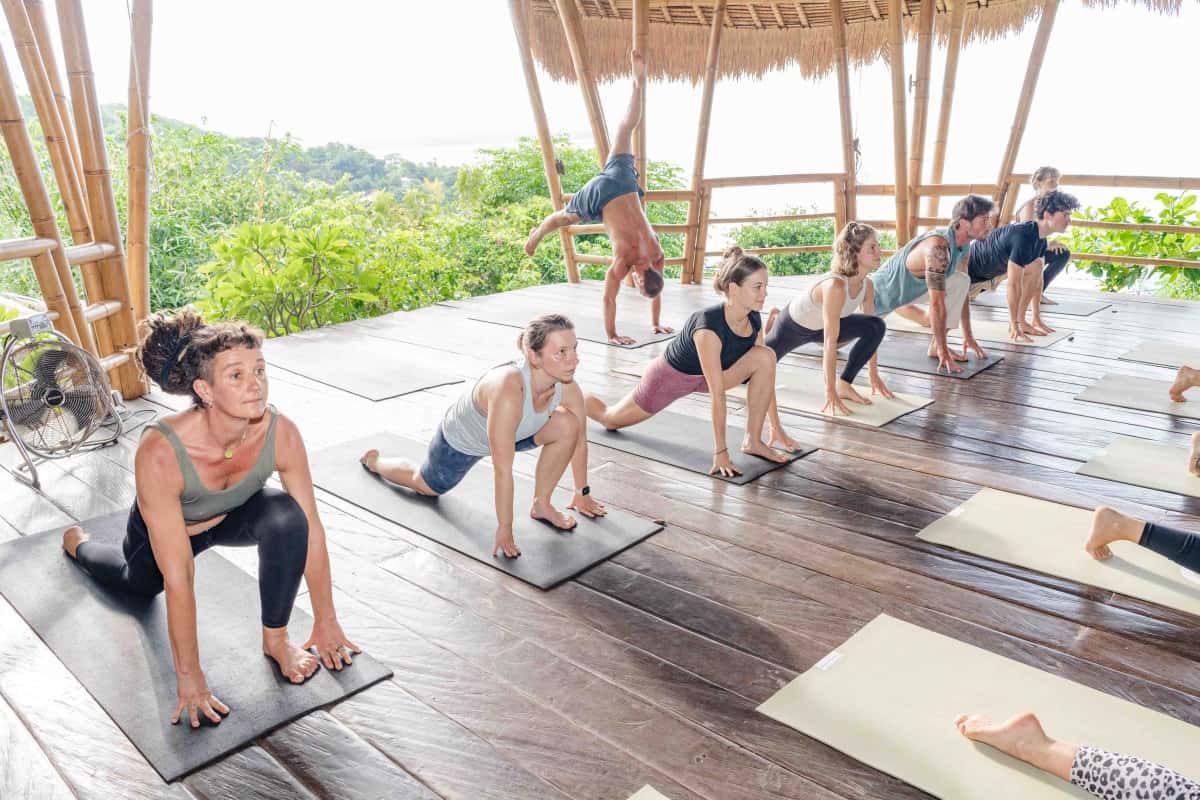
Bali didn’t invent yoga, but over the past two decades it has become one of the few places on earth where the practice feels woven into the landscape itself. Rice terraces double as backdrops for sunrise Vinyasa, centuries-old temple ceremonies run alongside sound-healing circles, and entire micro-economies in towns like Ubud and Canggu now revolve around the mat. If you’re planning a yoga trip to Bali — whether for a single drop-in class or a life-changing retreat — here’s what actually matters, based on how the island’s yoga scene really works in 2026.
Spotlight: Blooming Lotus Yoga, Ubud
If there’s one retreat center that comes up repeatedly when people talk about doing yoga properly in Bali, it’s Blooming Lotus Yoga, tucked in the village of Mawang, Lodtunduh — about 15 minutes south of central Ubud. It’s a useful reference point for what a well-run Bali retreat actually looks like, so it’s worth understanding before comparing other options.
A few things set it apart:
- Longevity and credentials. The school has been operating in Ubud for more than a decade and is a Yoga Alliance Registered Yoga School, which matters if you’re considering a teacher training rather than just a retreat — its 200-hour program qualifies graduates for RYT-200 registration.
- Range of programs. Alongside 4-day and 7-day all-inclusive retreats (starting every Sunday, with 4-day options also starting Wednesdays), it runs 23-day, 200-hour teacher trainings and donation-based silent meditation retreats.
- Setting. The property sits on hillside gardens above the Wos River, facing a traditional Balinese temple across the water, with accommodation in open-concept villas that each have their own plunge pool — a step up from the shared-dorm format some budget retreats use.
- Food and capacity. Meals are organic and vegan, served at the on-site restaurant, and groups are capped at a manageable size (historically around 16 guests per week), which keeps the teacher-to-student ratio workable.
- Price point. Retreats start from roughly US$350 (4-day) and US$700 (7-day), including accommodation, meals, and all classes and workshops — mid-range for Ubud, and transparent about what’s bundled in versus what’s an add-on (a shuttle into central Ubud runs a couple of times a week rather than daily, which is worth knowing if you want to explore town more freely).
Independent reviews from guests describe the teaching as attentive across skill levels, with the teacher-training track in particular praised for depth of content rather than being a scenic add-on to a vacation. As with any retreat, it’s worth reading recent reviews and confirming current dates and pricing directly, since these details shift year to year — but as a benchmark for what an established, credentialed Ubud retreat center looks like, Blooming Lotus is a solid starting point for comparison.
Why Bali, Specifically?
Yoga is practiced everywhere now, so it’s fair to ask why Bali holds such a specific reputation. Three things converge here that are hard to find together anywhere else:
- A living spiritual culture. Bali is predominantly Hindu, and daily life is structured around ritual — offerings placed on doorsteps each morning, temple ceremonies (odalan) throughout the year, purification rites at holy springs. Practicing yoga against that backdrop feels different from practicing in a converted warehouse studio back home; the context isn’t manufactured for tourists, it’s simply how the island lives.
- Density of expertise. Ubud alone has been building its yoga infrastructure since the early 2000s, and the result is a concentration of experienced teachers, teacher-training programs, and specialty studios (aerial yoga, Iyengar, tantra-based practice, hot yoga) that smaller destinations can’t match.
- Climate and setting. Bali’s tropical climate stays in the 26–30°C (79–86°F) range year-round, which means outdoor and semi-open-air shalas (yoga pavilions) work almost every day of the year.
The Three Main Yoga Hubs — and How They Differ
Not all of Bali’s yoga scene looks the same, and picking the right base matters more than most guides admit.
Ubud is the island’s cultural and spiritual core, set inland among rice terraces and jungle ravines. This is where most multi-day retreats and yoga teacher trainings are concentrated, and where the annual Bali Spirit Festival is held each May. If your priority is depth of practice, teacher training, or a slower, more introspective trip, Ubud is the obvious base.
Canggu is Bali’s surf-and-yoga hybrid town — younger, more social, with studios that cater to a digital-nomad crowd who want a strong Vinyasa or Yin class before or after a surf session, followed by a smoothie bowl. It’s louder and more built-up than Ubud, but convenient if you want beach access alongside your practice.
Uluwatu, on the island’s southern cliffs, has a smaller but distinctive scene — studios built into clifftop settings with ocean views, often popular with surfers looking for flexibility and recovery work rather than spiritual retreat.
Seminyak and Sanur offer yoga too, but function more as secondary options — Seminyak for travelers combining wellness with nightlife and shopping, Sanur as a calmer, more low-key alternative to Canggu.
What a Typical Class or Retreat Actually Costs
One thing that’s often glossed over: Bali yoga is genuinely affordable by international standards, but prices vary a lot by studio and format.
- Drop-in classes typically run from roughly IDR 100,000–160,000 (about US$6–10) at most established studios.
- Short retreats (3–5 days), including accommodation, meals, and daily yoga, generally start around US$200–500, though beachfront or boutique villa-style retreats can run considerably higher.
- Yoga teacher trainings, usually 200-hour programs run over 3–4 weeks, are a much bigger investment and vary widely by school — it’s worth researching the lead teacher’s lineage and certification body (most reputable programs are Yoga Alliance registered) rather than choosing on price alone.
When to Go
Bali’s climate is workable year-round, but the timing affects both your experience and your budget:
- Dry season (April–October) brings lower humidity and less rain, and is the most popular stretch for retreats.
- Wet season (November–March) still allows daily practice, since most shalas are covered, but expect afternoon downpours that can limit outdoor excursions.
- Peak season (July–August, and again December–January) brings higher prices and busier studios.
- Shoulder months (April–June, September–October) tend to offer the best mix of good weather, thinner crowds, and better retreat pricing.
A Realistic First Week: What to Expect Day to Day
If you’re new to Bali’s yoga scene, a first week often looks something like this: an early sunrise class (6–7am, before the heat sets in), a mid-morning break for breakfast and a walk through rice paddies or down to Campuhan Ridge, an afternoon workshop or spa treatment, and an evening restorative or Yin class as the heat breaks. Studios like The Yoga Barn in Ubud built their reputation partly on this all-day rhythm — offering everything from sunrise flow to sound healing under one roof, so you can structure a full day around the practice without needing to travel between venues.
It’s worth knowing that many studios operate on a drop-in schedule model rather than requiring package purchases, so you can sample multiple studios and teaching styles before committing to a retreat or training.
Questions Worth Asking Before You Book
A trustworthy guide should also tell you what to watch out for, since Bali’s popularity has produced a genuinely crowded retreat market:
- Who is actually teaching? Some retreat centers rotate visiting teachers rather than having a resident teacher present throughout — ask directly.
- What’s included versus optional? Excursions, spa treatments, and “healing ceremonies” are sometimes add-ons rather than included in the base price.
- Is the space open-air? This matters more than it sounds — a genuinely open-air shala with jungle or rice-field views is a different experience from an air-conditioned studio room, and not everyone realizes which they’re booking until they arrive.
- What’s the cancellation policy? Bali’s wet-season weather and occasional flight disruptions make flexible policies worth checking for.
The Honest Caveat
Bali’s yoga industry has grown fast enough that quality is uneven. Not every “retreat” is led by an experienced teacher, and some venues lean more heavily on Instagram aesthetics than substance. The upside is that because the scene is so large, it’s easy to shop around — read recent reviews, look at a teacher’s actual training background, and where possible, try a single drop-in class at a studio before signing up for a longer program there.
The Takeaway
Bali earns its reputation as a yoga destination not because the postures are different here, but because of what surrounds the practice: a living spiritual culture, genuine density of experienced teachers, and a climate that makes daily outdoor practice the norm rather than the exception. Whether you’re after a single grounding class in Canggu between surf sessions or a month-long teacher training in the rice fields outside Ubud, the infrastructure exists to support nearly any depth of practice — the main task is choosing the right hub and doing a little homework before you commit.
About The Author
